Above Board
The Definition
To be honest, open, and without deceit. It describes a transaction or action that is conducted in plain view, suggesting that there are no hidden motives or "tricks up one’s sleeve."
The Deep Dive
While many assume this phrase refers to a corporate "Board of Directors," its true origin is split between the high seas and the low-lit gambling dens of the 16th century. In both contexts, the "board" refers to a flat surface—either the deck of a ship or a wooden gaming table.
The phrase is rooted in the prevention of cheating. In card games, a player who kept their hands "above the board" (on top of the table) was seen as honest because they couldn't surreptitiously swap cards from their lap or hide an extra Ace in their sleeve.
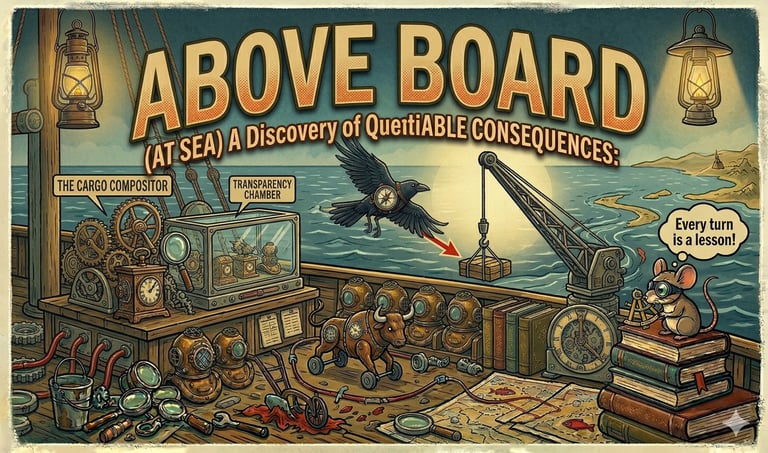
The Maritime Connection: In naval terminology, the "board" is the deck of the ship. Pirates and privateers would often hide their crew below deck—"below board"—to appear like a harmless merchant vessel. If a ship approached with its entire crew and weaponry "above board," it was signaling that it had nothing to hide and no hostile, sneaky intent.
The Transition: The phrase moved from literal card-playing etiquette to a general metaphor for integrity. It first appeared in print in the late 1500's, notably in the works of Elizabethan writers who used it to describe legal and business dealings that were "fair and square."
By the 17th century, the legendary Francis Bacon used the term to describe political transparency, cementing its place in the English language as the gold standard for "no funny business."
Fast Facts
The Opposite: To do something "under the table" is the direct linguistic descendant of keeping your hands below the board to cheat at cards.
The "Board" Evolution: In Old English, bord meant a plank or a table. This is why we still "board" a ship and sit at a "boarding house" for meals.
Literary Pedigree: The phrase was a favorite of 17th-century dramatists to distinguish between a "gentleman" and a "sharper" (a professional cheat).
References
Bacon, F. (1601). The Letters and the Life of Francis Bacon. (Collected Works).
Johnson, S. (1755). A Dictionary of the English Language. W. Strahan.
Moxon, J. (1683). Mechanick Exercises: Or, the Doctrine of Handy-Works. (Defining trade "boards").
Rogers, J. (1985). The Dictionary of Clichés. Facts on File Publications..