ASMR
The Definition
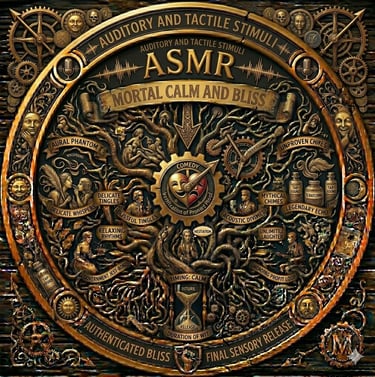
ASMR stands for Autonomous Sensory Meridian Response. It describes a deeply relaxing, involuntary physiological phenomenon characterized by a distinct static-like or tingling sensation that typically begins at the crown of the scalp and travels down the back of the neck, spine, and shoulders. This "brain tingle" is triggered by specific, low-intensity auditory, visual, or tactile stimuli and is accompanied by an intense wave of calm, comfort, and well-being.
The Deep Dive
While the physical sensation is as old as humanity, the path ASMR took from an unmapped, whispered personal quirk to a multi-billion-view digital subculture is a modern marvel of internet crowd-sourcing.
The Wordless Phenomenon: For decades, millions of individuals experienced these scalp tingles in total isolation. Because there was no formal medical or psychological term for the sensation, people had no way to search for it or discuss it. Those who experienced it often assumed they had a unique neurological glitch, while others associated it with childhood memories of having their hair brushed, listening to a teacher whisper, or watching a slow, methodical demonstration.
The Bob Ross Blueprint: Long before the internet weaponized the sensation, public television host Bob Ross was unwittingly the world's premier ASMR creator. His 1980’s and 90’s show, The Joy of Painting, accidentally checked every structural box of an ASMR trigger: a soft, rhythmic, reassuring voice; a gentle, predictable demeanor; and the crisp, repetitive auditory sounds of a palette knife scraping canvas or a dry brush beating against a wooden easel. Millions of viewers tuned in not to learn how to paint landscapes, but to let the low-key soundscape lull them into a state of profound relaxation.
The Internet Coalescence: The turning point occurred in 2009 on an online forum called SteadyHealth, where a user posted a thread titled "Weird sensation feels good." This single post acted as a digital lightning rod, attracting thousands of comments from people around the globe exclaiming, "I thought I was the only one!" * Coining the Term: In 2010, a healthcare IT professional named Jennifer Allen realized that if the phenomenon was ever going to be studied scientifically, it needed a serious, clinical-sounding name to rescue it from being dismissed as weird internet junk. She meticulously constructed the acronym to give it legitimacy:
Autonomous: Self-governing; spontaneous; coming from within.
Sensory: Pertaining to the physical senses.
Meridian: A nod to energy pathways, representing a peak, climax, or high point of development.
Response: An involuntary physiological reaction.
Anatomy of a Trigger
The ASMR universe functions on a highly specific menu of stimuli, known colloquially as "triggers." While highly subjective, they generally rely on high-fidelity, binaural (3D) audio recording equipment that mimics the spatial awareness of human ears.
Auditory Triggers: Crisp whispering, slow soft-spoken speech, fingernail tapping on textured plastics or woods, page-turning, scratching fabrics, or the sound of scissors cutting paper.
Visual Triggers: Slow, deliberate hand movements, tracing patterns in the air, or watching someone perform a hyper-focused, repetitive task with absolute precision (like packing a box or polishing a shoe).
Personal Attention Triggers: Simulated scenarios where the viewer is the direct recipient of care—such as a mock eye exam, a virtual haircut, or a skin consultation. This simulates the ancient primate grooming instinct, instantly lowering cortisol levels.
Fast Facts
The Neurochemistry of Calm: Functional MRI (fMRI) brain scan studies have shown that when an individual experiences ASMR, the brain lights up in areas associated with social bonding, empathy, and comfort—specifically releasing a chemical cocktail of oxytocin, dopamine, and endorphins.
The "ASMR Immunity" Divide: The phenomenon is not universal. Population studies indicate that a significant percentage of the human population is completely incapable of feeling the physical tingle, viewing the videos as merely boring or confusing. Conversely, some individuals suffer from misophonia (a hatred of sound), where the exact same whispering or tapping triggers an instant, visceral fight-or-flight rage response instead of calm.
References
Barratt, E. L., & Davis, N. J. (2015). Autonomous Sensory Meridian Response (ASMR): a flow-like mental state. PeerJ. (The first peer-reviewed scientific study published on the subject).
Poerio, G. L., et al. (2018). An examination of the physiological underpinnings of ASMR. PLOS ONE.
Oxford English Dictionary. (2026). The Neologistic Codification and Digital Proliferation of Contemporary Neurological Acronyms.