At a loss
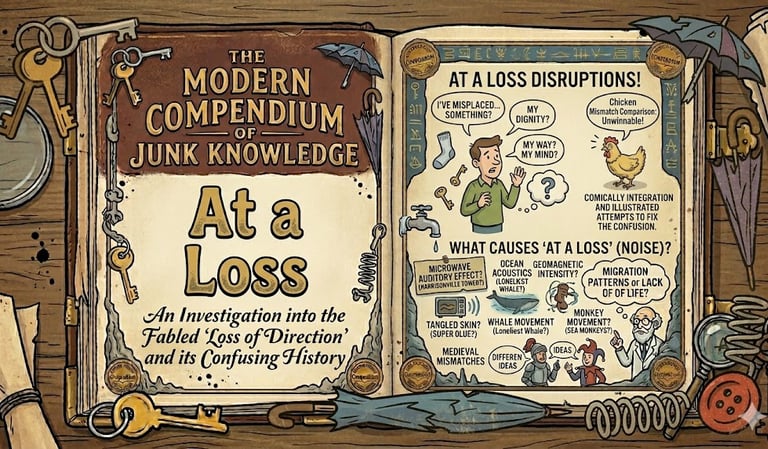
The Definition
A state of being puzzled, bewildered, or uncertain; specifically, a temporary inability to find the right words or the correct course of action. It describes a "mental bankruptcy" where the individual’s internal resources have been depleted by a situation that defies logic or expectation.
The Deep Dive
The "junk knowledge" behind this phrase is its journey from the cold ledgers of 17th-century merchants to the internal world of the human psyche. While we use it today to describe being "at a loss for words," the original "loss" was purely financial.
The Ledger Logic: In the 1600's, to sell a cargo or a property "at a loss" meant that the selling price was lower than the cost of acquisition. It was a failure of the basic mercantile objective. By the 1800's, the phrase was hijacked by poets and novelists to describe a "failure of the soul."
The "Zero Balance" Mind: When a person is "at a loss," they are experiencing a metaphorical deficit. The situation (the "input") is so overwhelming that the person’s brain (the "ledger") cannot produce a coherent response (the "profit"). You are quite literally "bankrupt" in that specific moment.
The phrase reached peak "junk" status in the Victorian era, where "being at a loss" became a polite social defense. If a gentleman or lady was asked a scandalous or difficult question, declaring oneself "at a loss" was a way to maintain dignity while admitting that the conversation had reached a dead end. It represents the "junk" of human communication: the realization that sometimes the "account" of our intelligence simply comes up empty.
Fast Facts
The "Lost" Connection: While "lost" and "loss" share the same root, being "at a loss" is different from being "lost." To be lost is to not know where you are; to be "at a loss" is to not know what to do next.
The Scent of the Hounds: In early English hunting lore, a pack of hounds was said to be "at a loss" when they literally lost the scent of their prey. The dogs would circle frantically, unable to proceed—the perfect physical representation of the modern idiom.
The Wordless Void: The most common modern usage is "at a loss for words," which interestingly implies that the words exist, but the speaker has temporarily lost the "currency" to pay for them.
References
Defoe, D. (1719). Robinson Crusoe. (Using "at a loss" to describe both physical and mental navigation).
Ammer, C. (2013). The Dictionary of Clichés. Skyhorse Publishing.
Taggart, C. (2010). Her Who Must Be Obeyed: The Phrases and Sayings That Make Us Who We Are. Michael O'Mara Books.
The Oxford English Dictionary. (2026). Loss (n.). Oxford University Press.