Burn the Bridge
The Definition
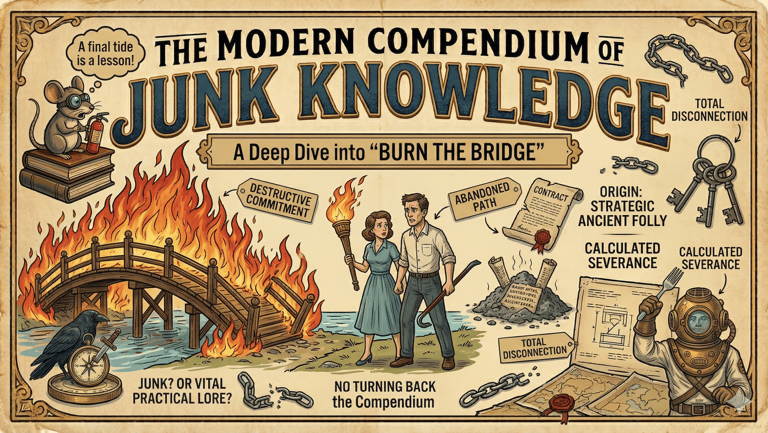
To intentionally act in a way that makes it impossible to return to a previous state, relationship, or position. It describes a "point of no return" where a decision is made permanent by destroying the path back.
The Deep Dive
This phrase is a literal tactic from the history of ancient and medieval warfare. Before the invention of long-range missiles or air support, geography was the most powerful weapon a general possessed. Rivers were the ultimate defensive barriers, and bridges were the only "keys" to crossing them.
The Retreat: When an army was forced to retreat across a river, the engineers would wait until the very last soldier had crossed. They would then set fire to the wooden structure. This "burning of the bridge" was a desperate defensive move to stop the enemy from pursuing them.
The "No Retreat" Order: Conversely, a truly daring commander (like Julius Caesar or Roman Emperor Julian) might burn the bridge behind their own men after crossing into enemy territory. This sent a chilling message to the troops: there is no going back. You either win the battle, or you die on this shore.
The phrase transitioned from a military command to a social metaphor in the late 19th century. To "burn your bridges" in a modern context—such as quitting a job by insulting the boss—is to perform a social demolition that ensures you can never cross back into that "territory" again.
Fast Facts
"Burning Your Boats": A sister phrase with an even older pedigree. In 711 AD, the Umayyad commander Tariq ibn Ziyad ordered his ships burned after landing in Spain to ensure his men had no thoughts of retreat.
The Infrastructure Risk: In actual warfare, burning a bridge was a double-edged sword; if the army eventually won and needed to move supplies forward, they had to rebuild the very bridge they destroyed.
First Literary Use: The figurative use appeared in Mark Twain’s letters and other 19th-century American literature to describe irreversible life choices.
References
Caesar, J. (c. 50 BC). Commentarii de Bello Gallico. (On tactical river crossings).
Sun Tzu. (c. 5th Century BC). The Art of War. (Discussing "Death Ground" where retreat is impossible).
Ammer, C. (2013). The Dictionary of Clichés. Skyhorse Publishing.
Taggart, C. (2010). Her Who Must Be Obeyed: The Phrases and Sayings That Make Us Who We Are. Michael O'Mara Books.