Cut to the Chase
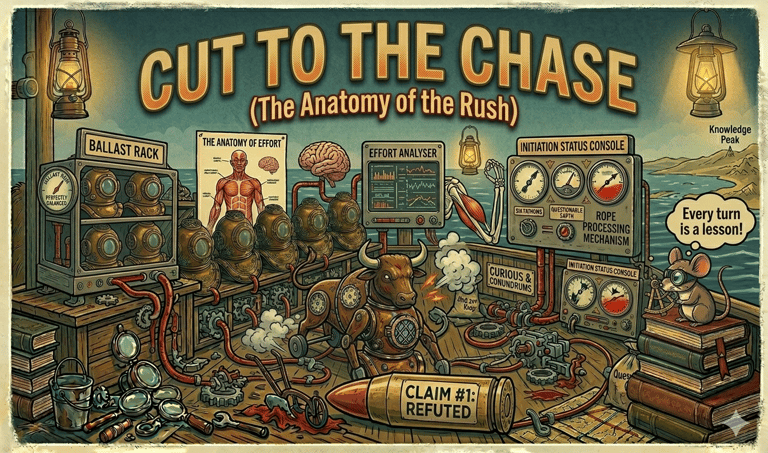
The Definition
To skip the unnecessary details and get straight to the point. It is used when a story is dragging or when someone is being overly verbose before reaching the "good part."
The Deep Dive
While many idioms have murky, ancient origins, "Cut to the chase" is a relatively modern invention born from the early days of Hollywood. In the era of silent film, the "chase scene" was the most exciting, reliable, and popular part of any movie—particularly in comedies and action flicks "cliffhangers."
Early screenplays and films often suffered from long-winded romantic subplots or tedious character setups that audiences (and producers) found boring. If a film was lagging during a test screening, the instruction to the film editor was literal: "Cut to the chase." By physically cutting the film reel and splicing it to the beginning of the climactic pursuit, the editor could instantly ramp up the energy of the movie.
The Silent Era Roots: The phrase is most often associated with the 1920's, specifically with Hal Roach comedies or the "Keystone Cops."
First Printed Evidence: One of the earliest written examples appears in the 1929 novel The Free Soul by Adela Rogers St. Johns: "I’ll cut to the chase and tell you what happened." It gained massive popularity in the 1940's and 50's as a staple of studio-exec talk.
The Moral of the Story: It’s a reminder that regardless of the era, humans have always had a limited attention span for exposition when there’s the promise of a high-speed pursuit on the horizon.
Fast Facts
The "Chase" Specialist: Mack Sennett, the "King of Comedy," was famous for insisting that every film include a chase, regardless of whether it actually made sense for the plot.
The Literal "Cut": In the 1920's, "cutting" involved a physical blade and tape; a mistake meant losing frames of the only master copy.
Action First: This idiom is one of the few that moved from a technical professional instruction (film editing) to a universal metaphor for efficiency.
References
Bordwell, D. (1985). The Classical Hollywood Cinema: Film Style & Mode of Production to 1960. Columbia University Press.
Quinion, M. (2004). Port Out, Starboard Home: The Fascinating Stories We Tell About the Words We Use. Penguin Books.
St. Johns, A. R. (1929). A Free Soul. Cosmopolitan Book Corporation.
Speake, J. (2015). Oxford Dictionary of Proverbs. Oxford University Press.