Drink the Kool-Aid
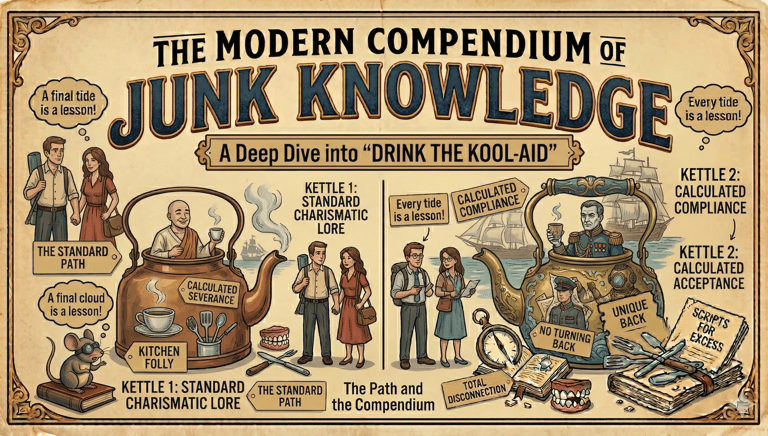
The Definition
To follow a person, ideology, or corporate culture with blind, unquestioning devotion, often to one's own detriment. It describes a state of "groupthink" where an individual abandons their critical thinking skills to align with a charismatic leader or a popular movement.
The Deep Dive
This is perhaps the darkest and most somber entry in the Compendium. Unlike most idioms that evolve from lighthearted naval or agricultural mishaps, this phrase is a direct reference to the Jonestown Massacre of November 18, 1978.
In the remote settlement of Jonestown, Guyana, over 900 members of the Peoples Temple, led by the charismatic and increasingly paranoid Jim Jones, died in a mass murder-suicide. The primary method of death was a large vat of grape-flavored drink laced with cyanide, sedatives, and tranquilizers.
The Brand Confusion: While the phrase immortalized "Kool-Aid," investigators actually found packets of Flavor Aid (a cheaper competitor) at the scene. Because Kool-Aid was the most famous brand name in America, it became the linguistic shorthand for the tragedy.
The Forced Choice: The "junk knowledge" often implies the followers went willingly and happily. However, survivors and forensic evidence suggest that many were coerced at gunpoint or misled, and the children were the first to be fed the poison.
The phrase moved from a news headline to a cynical cultural metaphor in the 1980's. It was initially used by journalists to describe political followers who were "brainwashed," but by the 1990's, it became a common (and often controversial) piece of office slang used to describe employees who bought into a company's "mission statement" a little too enthusiastically.
Fast Facts
The "Flavor Aid" Reality: Flavor Aid was a powdered drink mix popular in the 1970's; its manufacturer, Jel Sert, has spent decades trying to distance the brand from the Jonestown association.
The Corporate Pivot: In the Silicon Valley "dot-com" boom of the late 90's, "drinking the Kool-Aid" became a badge of honor among startups, signifying "all-in" commitment to a radical new idea.
The Ethical Debate: Many historians and survivors find the casual use of the phrase offensive, as it trivializes the deaths of nearly a thousand people by turning a massacre into a punchline for office politics.
References
Reiterman, T., & Jacobs, J. (1982). Raven: The Untold Story of the Rev. Jim Jones and His People. Dutton.
Guinn, J. (2017). The Road to Jonestown: Jim Jones and Peoples Temple. Simon & Schuster.
Ammer, C. (2013). The Dictionary of Clichés. Skyhorse Publishing.
The New York Times. (1978, November 20). 900 Die in Guyana Cult Massacre.