Duct Tape
The Definition
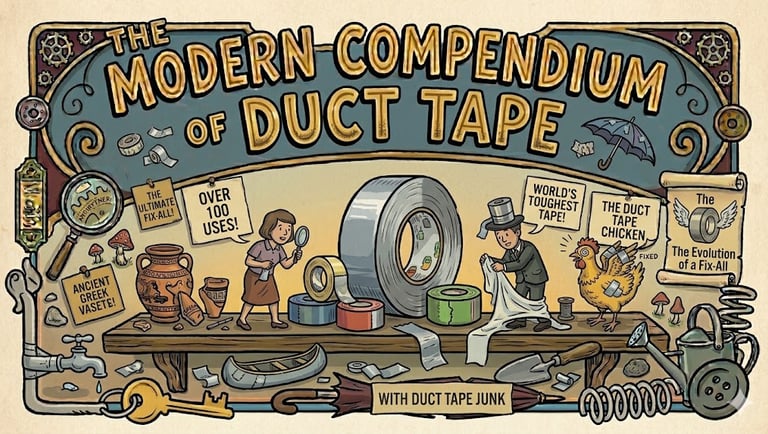
A cloth-backed, waterproof adhesive tape originally developed for the military. Known for its incredible strength, durability, and "tear-ability," it has evolved from a specialized repair tool into a universal cultural icon of DIY ingenuity. It is the material of choice for anyone who believes that if you can't fix it with duct tape, you aren't using enough duct tape.
The Deep Dive
The "junk knowledge" behind duct tape is that its name and its purpose have been in a 100-year tug-of-war. Most people think it was invented to wrap air ducts, but that was actually the one job it was arguably the worst at.
The Mother of Invention: In 1943, Vesta Stoudt, a mother with two sons serving in the Navy, was working at an ordnance plant. She noticed that the thin paper tape used to seal ammunition boxes was difficult to pull off in the heat of battle, often causing soldiers to struggle for life-saving rounds. She wrote a letter to President Franklin D. Roosevelt suggesting a waterproof, cloth-based tape. FDR was so impressed he passed the idea to the War Production Board.
Duck vs. Duct: The original military version was called "Duck Tape" for two reasons: it was backed by "cotton duck" fabric (a heavy-duty canvas), and its waterproof nature made water roll off it like a duck’s back. It was olive drab to match the soldiers' gear.
The Post-War Pivot: After WWII, the housing boom led to a need for a tape to connect heating and air conditioning ducts. The manufacturers changed the color from olive drab to silver to match the metal ductwork, and the name "Duct Tape" was born. Ironically, modern building codes often forbid the use of standard duct tape on actual ducts because the adhesive dries out and fails under extreme temperature fluctuations.
Duct Tape reached peak "junk" status in the late 20th century as the "Swiss Army Knife" of materials. It represents the "junk" of human adaptability: it has been used to build boats, create prom dresses, and famously, to save the lives of the Apollo 13 astronauts by helping them build a carbon dioxide "scrubber" out of spare parts.
Fast Facts
The "Grey Tape" Mystery: In some parts of the world, it is simply called "power tape" or "silver tape." The specific "silver" color is actually just a layer of powdered aluminum added to the polyethylene backing.
The Woven Strength: The "cloth" in the tape is a scrim (a lightweight, open-weave fabric). This is what allows you to tear the tape perfectly straight by hand across its width, while making it nearly impossible to break by pulling it lengthwise.
The Medical Utility: In a pinch, duct tape has been used by wilderness medics to close wounds, stabilize broken bones, and even remove warts (a process known as Duct Tape Occlusion Therapy, which some studies suggest is more effective than freezing).
References
Stoudt, V. (1943). Letter to President Franklin D. Roosevelt regarding ammunition packaging.
Johnson & Johnson Revolving Archive. (2026). The Permacel Division and the Birth of Duck Tape.
NASA Apollo 13 Mission Logs. (1970). The Mailbox: Improvised CO2 Scrubber Assembly.