Frisbie AKA Frisbee
The Definition
"Frisbie" is the original, legal spelling of an American family name that became the unintentional catalyst for one of the most iconic pieces of twentieth-century toy manufacturing: the Frisbee. It represents a classic case of corporate linguistic hijacking, where a localized college prank using a piece of industrial bakeware was standardized into a global sports phenomenon.
The Deep Dive
Long before the word was associated with high-grade, aerodynamic plastics soaring across sunny beaches, it belonged to a gritty, flour-dusted factory floor in Bridgeport, Connecticut.
The Industrial Baker: In 1871, a successful baker named William Russell Frisbie moved to Bridgeport to manage a new branch of an industrial baking company, which he eventually bought out and renamed the Frisbie Pie Company.
The Campus Fuel: The business exploded over the next few decades, supplying thousands of fresh pies and cookies daily to grocery stores, boarding houses, and elite university dining halls across New England, most notably at nearby Yale University in New Haven.
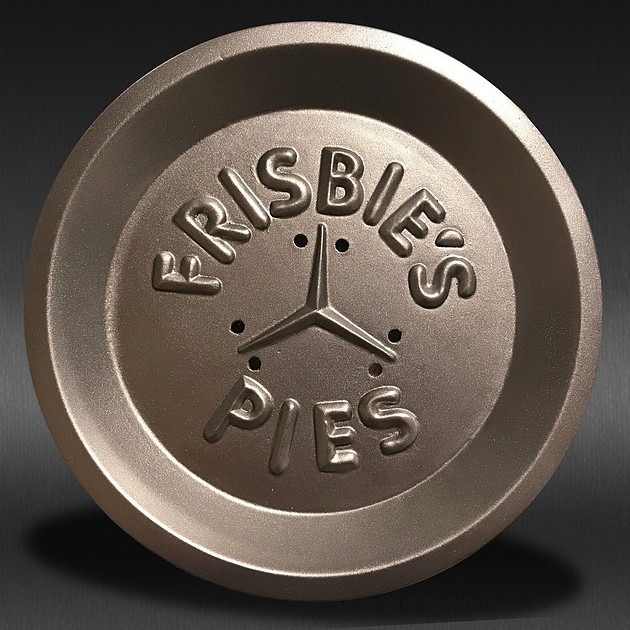
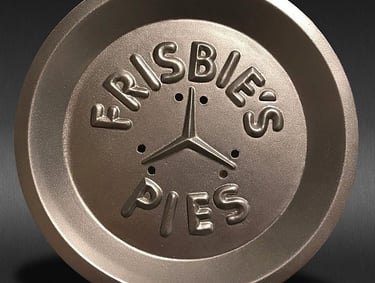
The Magic Canvas: The Frisbie Pie Company shipped its baked goods inside sturdy, circular, lightweight pans stamped out of polished tin. To ensure these valuable pans were returned to the bakery rather than thrown into the trash, the bottom of every single tin was embossed with the bold, industrial lettering: "Frisbie Pies."
The Yale Projectile: Around the turn of the century, Yale undergraduates discovered a brilliant secondary use for the empty, inverted metal pie tins. Thanks to their distinct curved rim and lightweight metal construction, a spun tin plate functioned as an incredibly effective, highly aerodynamic projectile.
The Warning Track: Students would spend hours on the campus greens hurling the metal tins at one another. Because a heavy tin plate spinning at high speed could easily break a nose or shatter a window, a strict campus safety protocol emerged: whenever a student launched a particularly erratic throw, they would scream out the defensive warning cry, "Frisbie!" to notify unsuspecting pedestrians to duck for cover.
The Plastic Inversion: In the late 1940’s, an inventive California pilot named Walter Frederick Morrison noticed the growing cultural obsession with flying saucers and space travel. He designed a civilian flying disc made of lightweight, flexible plastic, which he sold under names like the Pluto Platter.
The Wham-O Hijack: In 1955, the legendary toy company Wham-O bought the rights to Morrison’s plastic disc. While touring East Coast college campuses to market the new toy, Wham-O executives noticed that students were completely ignoring the space-themed branding. Instead, the kids were already throwing the plastic discs and calling them "Frisbies," drawing straight from the century-old tradition of the Bridgeport pie tins.
The Legal Sidestep: Recognizing a marketing goldmine, Wham-O decided to adopt the campus slang as the official trademark for the toy. However, to bypass massive trademark infringement lawsuits from the still-active Frisbie Pie Company, Wham-O executed a clever phonetic sidestep: they altered the spelling, legally registering the toy under the name Frisbee in 1957.
Fast Facts
The Ultimate Convergence: The original Frisbie Pie Company officially closed its historic Bridgeport factory doors in 1958—ironically, just one year after Wham-O officially locked down the "Frisbee" trademark, marking the exact point where the plastic imitation permanently replaced the pastry original.
The Aerodynamic Secret: The secret to why both the original metal tin and the modern plastic toy can fly lies in the Bernoulli Principle. The curved upper surface of the disc forces oncoming air to travel faster over the top than underneath it, creating a pocket of low pressure on top that generates aerodynamic lift.
References
Morrison, F. & Kennedy, P. (2002). Flat Flip Flies Straight: True Origins of the Frisbee. Wormhole Publishers. (The definitive historical text mapping out the transition from Connecticut bakeries to California plastic molds).
Ammer, C. (2013). The Dictionary of Clichés. Skyhorse Publishing.
Oxford English Dictionary. (2026). The Lexical Codification of Mid-Century Proprietary Plastic Trademarks and Regional Industrial Bakeware Nomenclature.