Garden Gnomes
The Definition
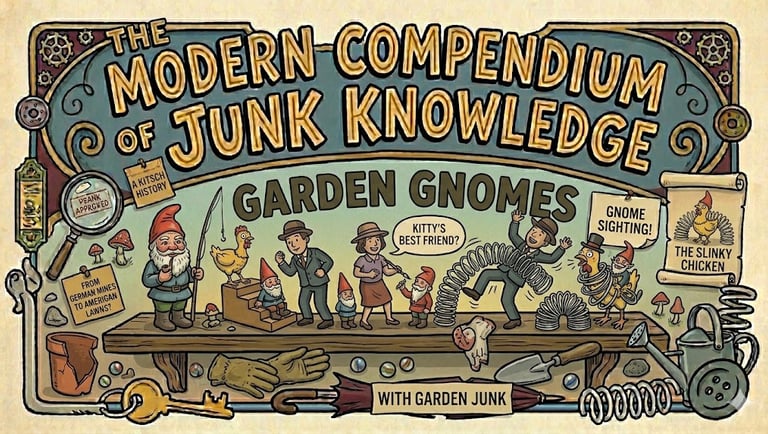
Small, ornamental statues typically depicting a bearded, pointed-capped humanoid creature, placed in gardens or yards. While they are often dismissed as kitschy lawn decor, they are the modern remnants of ancient European beliefs in spirits that protected the hearth, the farm, and the earth's hidden treasures.
The Deep Dive
The "junk knowledge" behind the garden gnome is that they weren't always plastic or mass-produced. They originated in the mining regions of 19th-century Germany (specifically Thuringia) and were known as Gartenzwerge (garden dwarves).
The Protective Spirit: The design is based on "Gnomes," a term coined by the alchemist Paracelsus in the 16th century to describe elemental beings of the earth. People placed them in gardens not just for decoration, but as a symbolic "guard" to watch over crops and livestock at night.
The Miner’s Uniform: The traditional look of the gnome—red floppy cap and leather apron—is actually a direct copy of the 19th-century German miner’s uniform. The bright red hat was used by miners so they could be easily spotted underground in the dark, and the "bearded old man" aesthetic reflected the seasoned, grizzled nature of the profession.
The Aristocratic Import: In 1847, Sir Charles Isham brought 21 terracotta gnomes from Germany to his estate in Lamport Hall, England. Only one, nicknamed "Lampy," survives today and is insured for millions of pounds. He is the "patient zero" for the British obsession with lawn ornaments.
Garden gnomes reached peak "junk" status in the late 1990's with the rise of "Gnome-napping"—the practice of stealing a gnome and sending photos of it "traveling" around the world to its original owner. This was famously popularized by the 2001 film Amélie and later used as a massive advertising campaign for Travelocity.
Fast Facts
The Plastic Revolution: The 1960's saw the shift from hand-painted terracotta to cheap, molded plastic. This mass-production is what turned the "protective earth spirit" into the symbol of suburban "kitsch" we know today.
The Chelsea Ban: For decades, the prestigious Chelsea Flower Show banned garden gnomes, claiming they detracted from the floral designs. The ban was briefly lifted in 2013 to celebrate the gnome's 100th anniversary in the UK.
The G.N.L.F.: The "Garden Gnome Liberation Front" is a real (though largely satirical) group in France that "liberates" gnomes from gardens and "returns" them to their natural habitat—usually a nearby forest.
References
Paracelsus. (1566). A Book on Nymphs, Sylphs, Pygmies, and Salamanders, and on the Other Spirits.
Way, T. (2009). Garden Gnomes: A History. Shire Library.
Lamport Hall Archive. (2026). The History of Lampy the Gnome.