Ghosting
The Definition
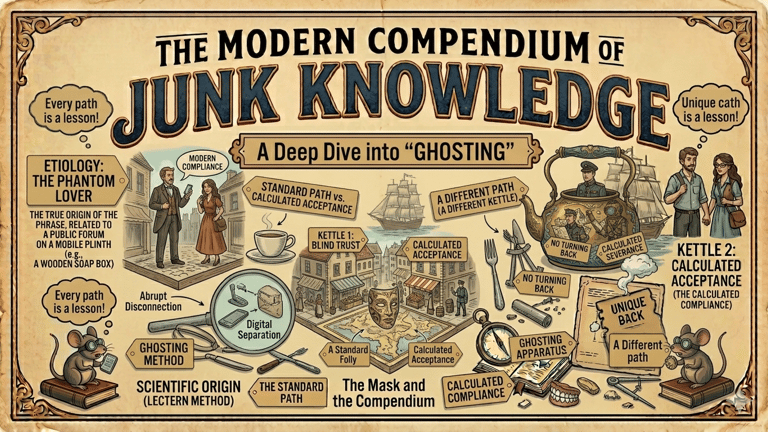
To abruptly end all communication with someone—a friend, a romantic partner, or a potential employer—without any explanation or warning. It is the act of becoming a "ghost" in another person’s digital life, leaving them with no closure and no way to respond.
The Deep Dive
While the term feels like a product of the Tinder and Slack era, the concept of "vanishing" from a social obligation is as old as the Victorian dinner party. Before it was "Ghosting," it was known as the "French Leave."
In the 18th century, leaving a party without saying goodbye to the host was considered a "French Leave" by the English (who found it rude) and a "leaving in the English fashion" (partir à l'anglaise) by the French.
The Digital Shift: The modern "Ghosting" phenomenon emerged in the early 2010's with the rise of asynchronous communication. In a world of "Read Receipts" and "Last Seen" timestamps, the act of not replying became a loud, deliberate statement.
The Psychology of the Void: Ghosting is often a byproduct of "choice overload." On dating apps or job boards, the infinite number of potential connections can make an individual feel disposable. Instead of navigating the awkwardness of a rejection, the "ghoster" simply deletes the thread, effectively erasing the other person from their reality.
The term was officially added to the Merriam-Webster Dictionary in 2017. It has since evolved into several sub-types, including "Oribiting" (where someone ghosts you but still likes your Instagram photos) and "Caspering" (the "friendly" ghosting where you send one final, polite rejection before disappearing).
Fast Facts
The Employment Ghost: "Ghosting" isn't just for dating; in the 2020's, it became a major trend in the labor market, with both recruiters and applicants failing to show up for interviews or first days of work without notice.
The "Bystander Effect": Studies suggest that people are more likely to ghost if they believe the other person has many other social options, as it lessens the "guilt" of the disappearance.
The First Viral Use: The term gained massive cultural traction in 2015 when rumors circulated that Charlize Theron had "ghosted" Sean Penn to end their engagement.
References
Merriam-Webster. (2017). New Words Added to the Dictionary: Ghosting.
Freedman, G., et al. (2018). Ghosting and Destiny: Implicit Theories of Relationships. Journal of Social and Personal Relationships.
Ammer, C. (2013). The Dictionary of Clichés. Skyhorse Publishing.
Turkle, S. (2015). Reclaiming Conversation: The Power of Talk in a Digital Age. Penguin Press.