Goody Two Shoes
The Definition
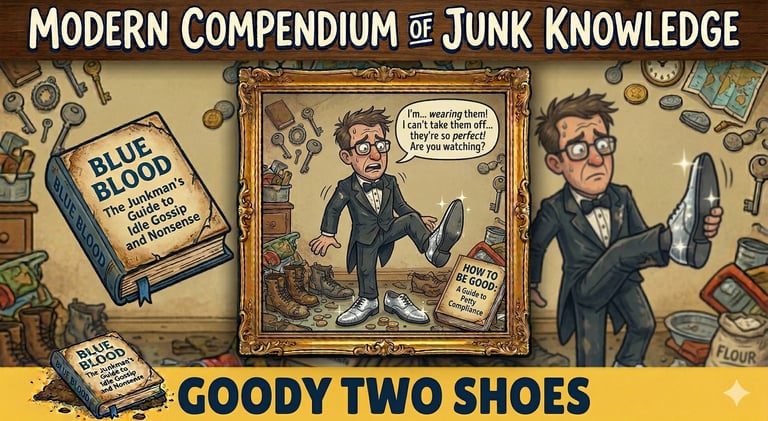
A person who is annoyingly virtuous, polite, and follows every rule to an impeccable (and often irritating) degree. It describes someone whose "perfect" behavior is seen as a way to curry favor or show off their moral superiority.
The Deep Dive
While most modern users assume this is just a generic playground taunt, it is actually the title of a wildly popular 18th-century children's story: The History of Little Goody Two-Shoes, published in 1765 by John Newbery.
The story follows a poor orphan girl named Margery Meanwell. Margery is so destitute that she owns only a single shoe. Her life changes when a wealthy gentleman takes pity on her and buys her a complete pair of shoes.
The Catchy Refrain: Margery is so overjoyed by her new footwear that she runs around the village showing everyone her feet, exclaiming, "Two shoes! See, two shoes!"
The Virtue Signal: The rest of the book follows Margery as she educates herself and becomes a wise, virtuous schoolmistress. She is relentlessly kind, pious, and patient, eventually marrying a wealthy landowner and living a life of perfect moral rectitude.
The "junk knowledge" irony is that the original book was intended to be an inspirational tale of "social climbing through virtue." However, by the 19th century, the character's relentless perfection began to grate on the public. The name "Goody Two-Shoes" shifted from a compliment to a sarcastic jab at anyone who seemed "too good to be true."
Fast Facts
The "Goody" Title: "Goody" was a common abbreviation for "Goodwife," a social title used for women of humble status (similar to "Mrs." but lower on the social ladder).
The Secret Author: While John Newbery published the book, many historians believe it was actually written by the famous Irish novelist Oliver Goldsmith, who was known for his sentimental and moralistic style.
The Newbery Medal: John Newbery was so influential in children's literature that the most prestigious award for American children's books, the Newbery Medal, is named in his honor.
References
Newbery, J. (1765). The History of Little Goody Two-Shoes. (Attributed to Oliver Goldsmith).
Dartinger, F. J. (1966). The Guardian of Education: A History of Children's Books. Oxford University Press.
Ammer, C. (2013). The Dictionary of Clichés. Skyhorse Publishing.
The Oxford English Dictionary. (2026). Goody (n.1). Oxford University Press.