Grape-Nuts
The Definition
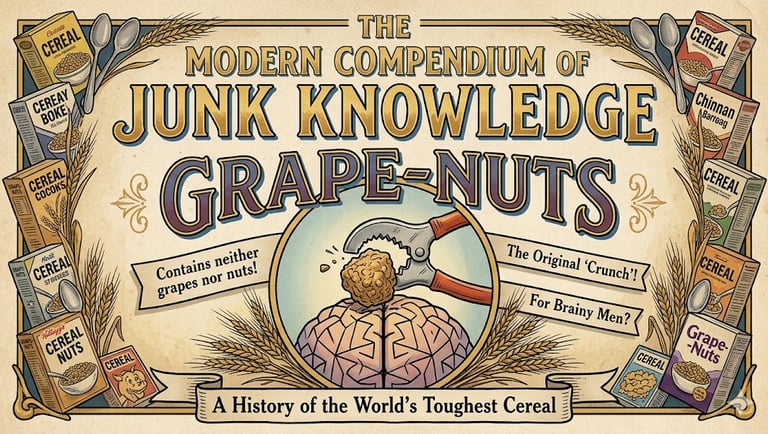
A brand of breakfast cereal developed in 1897, known for its distinctively hard, pebble-like texture and its ability to remain crunchy in milk for extended periods. It is the ultimate "deceptive" health food, famously containing neither grapes nor nuts.
The Deep Dive
The "junk knowledge" mystery surrounding Grape-Nuts is why its creator, the eccentric health advocate C.W. Post, chose a name that bears no relation to the ingredients. The cereal is made from a simple batter of wheat, barley, salt, and yeast, which is baked into a massive, rock-hard loaf and then ground into small granules.
There are two primary theories regarding the naming of this dental-challenging staple:
The Glucose Theory: During the long, slow baking process, the starches in the grains break down into simple sugars, specifically glucose, which C.W. Post referred to as "grape sugar." Because the resulting granules had a distinctively nutty flavor and crunch, he combined the two concepts into "Grape-Nuts."
The Shape Theory: Some historians suggest the name was purely visual. Before the cereal was ground into the fine pebbles we know today, the experimental batches resulted in small, round clumps that Post thought resembled grape seeds (which were commonly referred to as "nuts" in the 19th century).
Post marketed the cereal with the mysterious catchphrase "There's a Reason," implying it was a brain food that could cure everything from appendicitis to loose teeth. While the medical claims were eventually debunked, the cereal survived due to its incredible shelf life and its role as a concentrated energy source for explorers and soldiers.
Fast Facts
The Explorer’s Ration: Because it is incredibly dense and resists spoilage, Grape-Nuts was a staple for Admiral Richard Byrd’s expeditions to Antarctica and was included in Allied "K-Rations" during World War II.
The "Nut" in History: In the late 1800's, the word "nut" was often used to describe any small, hard, edible kernel or seed, not just the fruit of a tree.
The Dental Risk: The cereal is so famously hard that it has become a staple of American humor; it is often joked that one needs "teeth of steel" or a "pre-soak" period of twenty minutes before attempting to eat it.
References
Post, C.W. (1897). The Road to Wellville. (Promotional pamphlet).
Price, B. (2001). The Cereal Tycoons: C.W. Post, Will Kellogg, and the Business of Breakfast.
Ammer, C. (2013). The Dictionary of Clichés. Skyhorse Publishing.
Smith, A. F. (2007). The Oxford Companion to American Food and Drink. Oxford University Press.