Groucho Glasses
The Definition
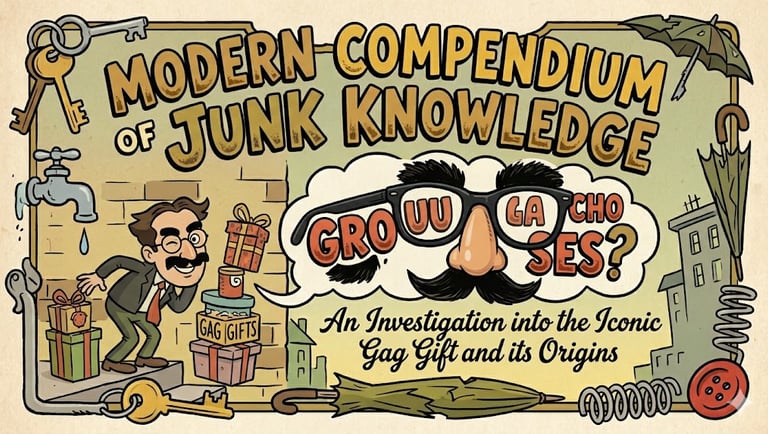
A comedic disguise consisting of black plastic spectacle frames with attached oversized bushy eyebrows, a large plastic nose, and a thick black mustache. Modeled after the iconic features of comedian Julius "Groucho" Marx, it is the universal shorthand for a "bad disguise" and remains one of the most recognizable novelty items in the world.
The Deep Dive
The "junk knowledge" behind Groucho glasses is that they were the first—and perhaps only—time a person’s face was successfully patented and sold as a toy while they were still using it. While most celebrities sue to protect their likeness, Groucho Marx found the existence of the glasses both hilarious and a testament to his own ubiquity.
The Vaudeville Mask: The components of the mask represent Groucho’s actual stage makeup. In his early vaudeville days, he didn't have time to glue on a fake mustache between acts, so he simply painted one on with black greasepaint. The bushy eyebrows and cigar completed the look, creating a "living cartoon" that was easy for the audience to identify from the back of the theater.
The "Beagle" Invention: The commercial version of the glasses was introduced in the early 1940's by the H. Fishlove & Co. novelty company in Chicago. They were originally marketed under the name "Beagle Glasses" (likely a play on the word "beguile" or a reference to a character name).
The Disguise Paradox: The genius of the Groucho mask is that it is a disguise that makes you more visible, not less. It is the definitive "junk" accessory because its function is the opposite of its form; it is a mask that reveals the wearer's intent to be silly rather than their intent to be hidden.
Groucho glasses reached peak "junk" status in the mid-20th century, becoming the official icon of the "prankster." They represent the "junk" of celebrity: the point at which a human being’s physical features are so iconic they can be stripped of their humanity and mass-produced as a plastic punchline.
Fast Facts
The Official Emoji: The "disguised face" emoji (🥸) was added to the Unicode standard in 2020. It is a direct digital rendering of the Groucho glasses, ensuring the comedian's 100-year-old face remains a permanent part of 21st-century digital communication.
Groucho’s Real Face: Groucho Marx eventually grew a real mustache in the 1940's because he was tired of people not recognizing him in public without the greasepaint. Ironically, after the glasses became a hit, he was often accused of "wearing the toy" when he went out in public.
The "Noisemaker" Variation: Some early deluxe versions of the glasses included a "squeaker" in the nose or a mechanism that allowed the eyebrows to wiggle when the wearer moved their jaw, adding an auditory layer to the visual gag.
References
Marx, G. (1959). Groucho and Me. Geis Associates.
Fishlove, I. (1940). U.S. Patent No. 2,212,324: Toy Disguise Device.
The National Museum of American History. (2026). The Comedy of the Mask.