Hand in the Cookie Jar
The Definition
This idiom refers to the act of being caught while doing something dishonest, illicit, or unauthorized—specifically for personal gain. It describes the moment an individual is discovered siphoning funds, stealing resources, or overstepping boundaries for their own benefit.
The Deep Dive
The expression is a 20th-century Americanism that utilizes a domestic, childhood metaphor to describe adult financial or ethical transgressions.
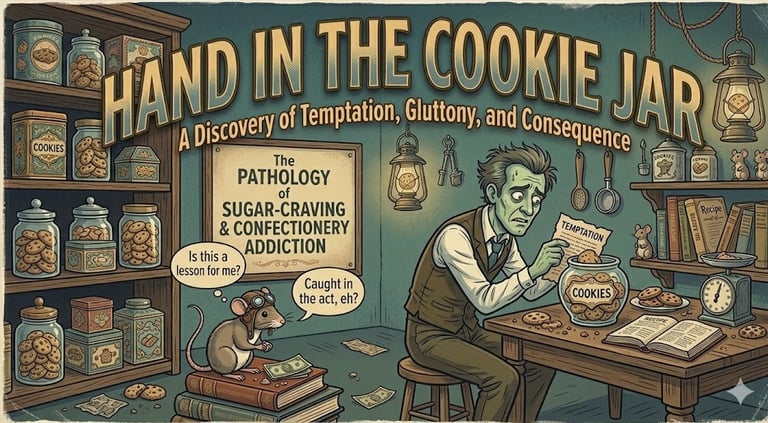
Domestic Temptation: The literal "junk" origin of the phrase lies in the kitchen. For a child, the cookie jar represents a forbidden reward that requires stealth to access. Getting caught with one's "hand in the cookie jar" is a foundational lesson in temptation and consequence. In a professional context, this childhood image is applied to embezzlers or corrupt officials, highlighting the infantile nature of their greed.
Corporate and Political Use: The phrase gained significant traction in the mid-20th century as a descriptor for white-collar crime. Unlike more violent metaphors for theft, this idiom implies a sneaky, opportunistic pilfering of communal resources. It suggests that the perpetrator believed no one was watching while the assets they were slowly depleted.
Linguistic Comparison: The idiom is often used interchangeably with being "caught red-handed." However, while "red-handed" has a darker, more ancient origin related to blood, "hand in the cookie jar" retains a uniquely American, almost colloquial quality. It suggests that the crime, while serious, was born from a common human weakness for "sweets"—or in this case, easy money.
Fast Facts
The "Cookie Jar" Accounting: In modern finance, "cookie jar accounting" is a specific fraudulent practice where a company hides a surplus of earnings during good years to "snack on" during leaner years, artificially smoothing out their financial performance.
Psychological Impact: Being caught with a hand in the cookie jar often leads to a public "facing of the music," as the betrayal of trust is seen as both a moral and professional failure.
References
Ammer, C. (2013). The Dictionary of Clichés. Skyhorse Publishing.
Safire, W. (2008). Safire's Political Dictionary. Oxford University Press.
Oxford English Dictionary. (2026). The Domesticity of American Financial Slang.