Hermits for Hire
The Definition
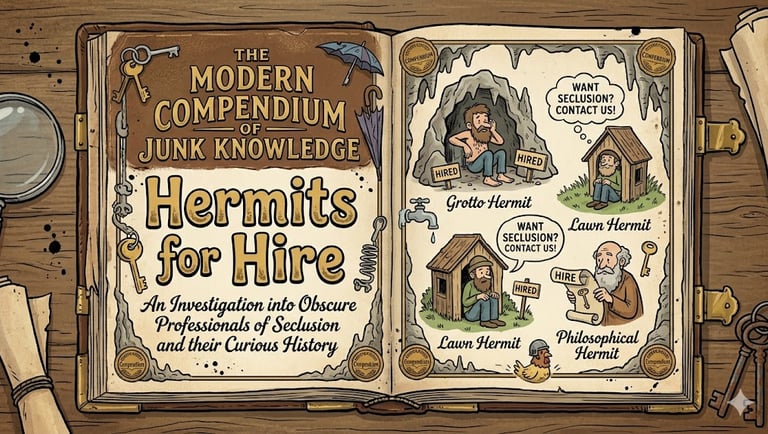
Also known as "ornamental hermits," these were real people hired by wealthy 18th-century landowners to live in "hermitages"—purpose-built caves, grottoes, or rustic shacks—on their estates. They served as living garden ornaments, intended to provide an atmosphere of melancholy, wisdom, and "natural" spirituality for the entertainment of the owner and their guests.
The Deep Dive
The "junk knowledge" behind the ornamental hermit is that they were essentially the human precursors to the garden gnome. During the Georgian era, the "Picturesque" movement in landscaping prize-winning gardens wasn't just about flowers; it was about creating a mood of "pleasing decay" and philosophical reflection. A garden was considered incomplete without a resident sage to haunt its shadows.
The Employment Contract: Landowners would place advertisements in newspapers seeking a "hermit." The terms were often extreme: a common contract lasted seven years, during which the hermit was forbidden from cutting their hair, beard, or nails. They were often required to remain barefoot, wear a coarse robe (resembling a druid), and never speak to the servants or wander off the estate grounds.
The Living Diorama: Most hermits weren't there to actually dispense wisdom. They were meant to be seen from a distance, perhaps sitting at a rustic table with a skull and a Bible, or "fleeing" back into their cave as guests approached. This created the illusion that the estate was so ancient and spiritual that it naturally attracted holy men.
The High Price of Solitude: If a hermit managed to fulfill a seven-year contract, the payout was massive—often enough (around 700 guineas) to live comfortably as a "gentleman" for the rest of their lives. However, few actually finished the term; one famous hermit at the Painshill estate lasted only three weeks before he was caught getting drunk at the local pub.
The ornamental hermit reached peak "junk" status in the late 1700's. It represents the "junk" of aristocratic eccentricity: the literal commodification of solitude. When real people became too difficult to manage, landowners began replacing them with wax figures or mechanical automatons that could move or speak on cue—eventually downsizing the concept into the ceramic garden gnomes we know today.
Fast Facts
The "Merlin" Trend: Queen Caroline (consort to George II) helped spark the fad in 1735 by building "Merlin’s Cave" at Richmond, which she populated with wax figures of the legendary wizard and his secretaries.
The Father Francis: One of the most successful hermits was "Father Francis" at Hawkstone Park. He was so popular with tourists that the estate owners eventually built an onsite pub, the Hawkstone Arms, to accommodate the crowds coming to see him.
Professional Equipment: Most hermits were provided with a standardized set of "hermit props": a pair of spectacles, a Bible, a wooden bowl, an hourglass, and a mat of rushes for a bed.
References
Campbell, G. (2013). The Hermit in the Garden: From Imperial Rome to Ornamental Gnome. Oxford University Press.
Wrighte, W. (1767). Grotesque Architecture, or Rural Amusement.
The London Evening Post. (1797). Advertisements for Professional Solitude."