Hocus Pocus
The Definition
This idiom refers to trickery, deception, or nonsense disguised as something meaningful or magical. It is often used to dismiss complicated explanations as a "smoke and mirrors" routine designed to distract from the truth or to conceal a lack of substance.
The Deep Dive
The phrase is a classic example of linguistic "junk" created through the deliberate corruption of formal language for the purpose of entertainment and misdirection.
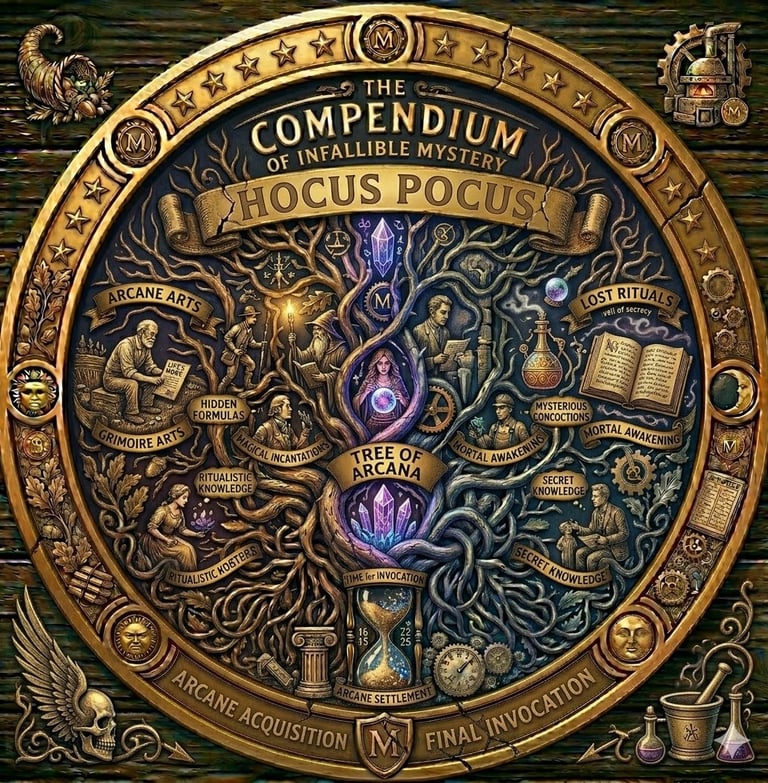
A Clerical Caricature: Many etymologists believe the phrase originated as a 17th-century parody of the Latin phrase Hoc est enim corpus meum ("For this is my body"), spoken during the Catholic Mass. Street performers and jugglers, looking to add an air of ancient authority to their tricks, likely mimicked the sound of the Latin to create a pseudo-magical incantation. It was a way to "color outside the lines" of religious solemnity to fascinate a crowd.
The "Hocus Pocus" Persona: By the 1630's, the term was so synonymous with magic that "Hocus Pocus" became a common stage name for magicians. The earliest known magic manual in English, published in 1634, was titled Hocus Pocus Junior: The Anatomie of Legerdemain. This book transformed the phrase from a verbal trick into a professional brand for those who made a living through sleight of hand.
Modern Skepticism: In contemporary usage, the phrase has moved away from the stage and into the office or the lab. When someone labels a proposal or a theory as "hocus pocus," they are suggesting that the "straight arrow" facts are being obscured by unnecessary complexity or intentional fraud.
Fast Facts
The "Hoax" Connection: Some linguists suggest that the word hoax is actually a shortened, evolved form of hocus, further linking the phrase to the concept of intentional deception.
The "Abracadabra" Rival: While "hocus pocus" often implies a deceptive trick, "abracadabra" is a much older term that was originally used as an amuletic charm to ward off disease and bad luck.
References
Ady, T. (1656). A Candle in the Dark.
Ammer, C. (2013). The Dictionary of Clichés. Skyhorse Publishing.
Oxford English Dictionary. (2026). The Secularization of Liturgical Latin in Folk Magic.