Knock 'em Dead
The Definition
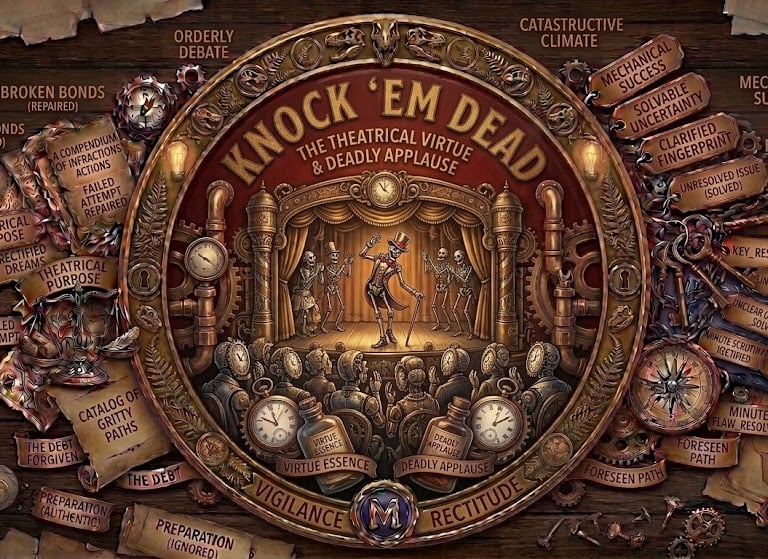
This idiom is an enthusiastic wish for someone to perform exceptionally well and make a stunningly positive impression on an audience. It serves as a boost of confidence before a high-stakes event, suggesting that the performance will be so powerful it metaphorically "slays" the listeners or spectators with its brilliance.
The Deep Dive
Like many of our favorite "junk" phrases, this one was forged in the high-pressure, combative world of late 19th-century American show business.
Vaudeville Violence: The phrase first appeared in the 1880's and 90's within the American vaudeville circuit. The relationship between a performer and their audience was often viewed as a metaphorical battle. To succeed, an entertainer had to "slay," "kill," or "knock dead" a crowd that might otherwise be indifferent or hostile. If you didn't knock 'em dead, you were likely to get the hook or find yourself in a tight spot with the theater manager.
The "Tempo" Myth: A persistent bit of theater lore suggests that "knock 'em dead" refers to performers pounding their feet on the stage floor to give the orchestra the correct tempo before their entrance. While rhythmic foot-pounding was common, most linguists agree the "violent" terminology is simply vaudeville hyperbole—using extreme language to describe the extreme emotional impact of a great show.
Universal Encouragement: By the mid-20th century, the phrase had migrated from the wings of the theater into the wider world. It became the phrase of choice for wishing luck to anyone about to step into the spotlight, whether it be a job interview, a courtroom summation, or a first date. It remains the ultimate way to tell someone to perform so well that they leave the audience speechless.
Fast Facts
The "Break a Leg" Rival: While "break a leg" is born of the same theatrical superstition—the idea that wishing for good luck actually brings bad luck—"knock 'em dead" is a more direct and aggressive expression of confidence.
The "Em" Punctuation: The apostrophe before the "em" is a contraction of "them," signaling the informal, colloquial roots of the phrase. Writing it as "knock them dead" often feels a bit too formal for the raw energy of the sentiment.
References
Ammer, C. (2013). The Dictionary of Clichés. Skyhorse Publishing.
Lighter, J. E. (1994). Historical Dictionary of American Slang.
Oxford English Dictionary. (2026). The Hyperbolic Lexicon of Variety Entertainment.