Living High on the Hog
The Definition
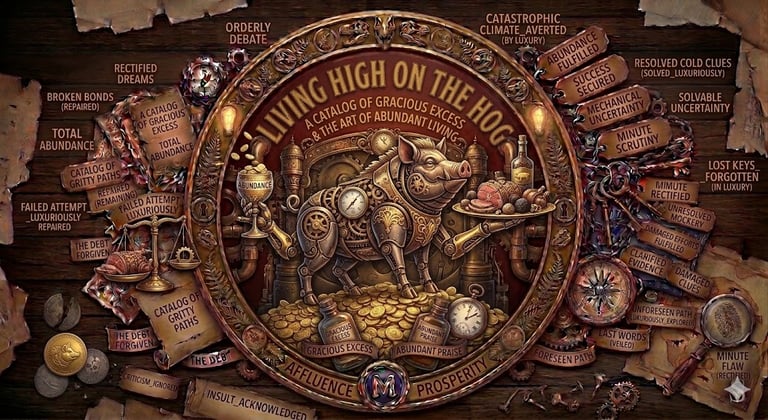
To "live high on the hog" is to live in luxury or prosperity, enjoying the very best of everything. It specifically refers to having the financial freedom to consume high-quality goods and services that are generally out of reach for the average person.
The Deep Dive
The phrase is a literal reference to the anatomy of a pig and the historical hierarchy of meat distribution.
Top-Shelf Cuts: Physically, the most desirable and expensive cuts of pork—such as the loin, ham, and tenderloin—come from the upper parts of the animal. The "lower" parts of the hog, including the trotters (feet), hocks, and jowls, were historically considered less desirable and were often the only portions available to the poor or enslaved. Therefore, eating "high on the hog" meant you were wealthy enough to afford the premium cuts from the top of the animal.
American Origins: While the concept of status-based meat consumption is ancient, the specific phrasing is an Americanism that gained traction in the late 19th and early 20th centuries. It is particularly associated with the Southern United States and African American vernacular, where the distinction between "soul food" (traditionally using the lower, discarded parts of the pig) and "high" dining was a sharp marker of class and economic status.
The Rural Reality: In agrarian communities, the annual hog slaughter was a major event. How a family consumed their pork throughout the winter was a "straight arrow" indicator of their thrift and prosperity. Those who could afford to eat the best parts early or exclusively were seen as living a life of enviable ease.
Fast Facts
The "Hog" Symbolism: In Western culture, the hog has long been a symbol of both gluttony and wealth (e.g., the "piggy bank"). This idiom leans into the wealth aspect, focusing on the quality of life rather than just the quantity of consumption.
20th Century Shift: By the 1940's, the phrase had moved entirely beyond the kitchen and was used to describe any lavish lifestyle, from driving expensive cars to staying in five-star hotels.
References
Ammer, C. (2013). The Dictionary of Clichés. Skyhorse Publishing.
Hilliard, S. B. (1972). Hog Meat and Hoecake: Food Supply in the Old South.
Oxford English Dictionary. (2026). The Gastronomic Origins of American Class Idioms.