Low-Hanging Fruit
The Definition
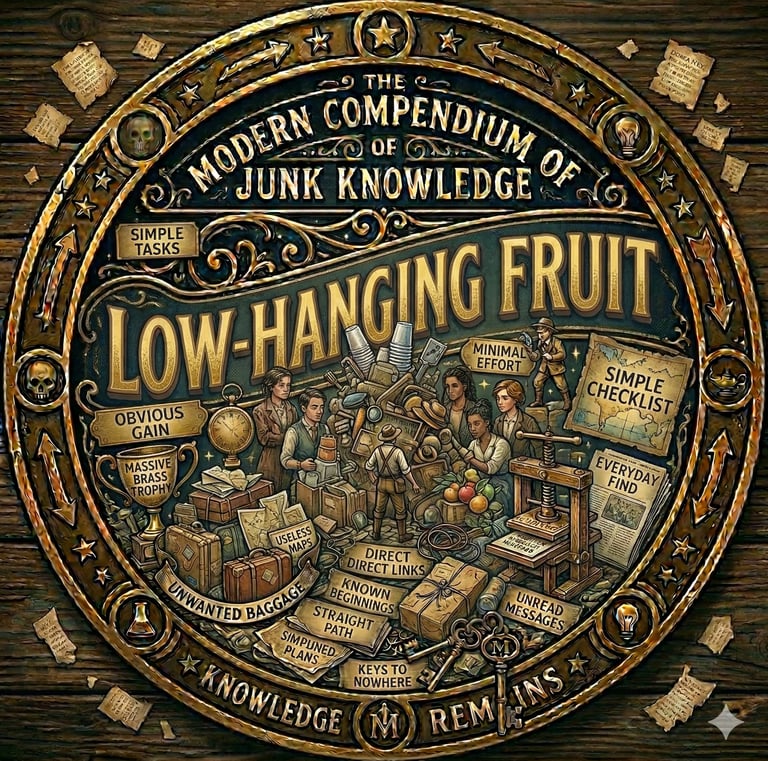
The most easily achieved of a set of tasks, measures, or goals. In a business context, it refers to the "quick wins"—the problems that can be solved with the least amount of effort or the customers who are the easiest to convince.
The Deep Dive
This phrase is a literal observation from the world of orchard management. Whether you are picking apples, peaches, or cherries, the fruit at the bottom of the tree is the most accessible.
The Harvest Strategy: For a casual picker or a time-pressed laborer, the "low-hanging fruit" is a gift. You don't need a ladder, you don't need to climb, and you don't risk a fall. You can fill a basket in minutes by simply reaching out your hand.
The Diminishing Returns: The "junk knowledge" warning inherent in the phrase is that once the low-hanging fruit is gone, the work becomes significantly harder. The remaining fruit—often the sweetest and most sun-ripened—is at the top of the canopy. To get it, you need specialized equipment, more time, and a higher tolerance for risk.
The phrase transitioned from the farm to the boardroom in the late 20th century. It became a staple of "management speak" in the 1990's, used to describe the first phase of a project where a team tackles the obvious, easy-to-fix bugs or targets the most receptive market demographics before the "real" work begins.
Fast Facts
The Sweetness Myth: In many fruit species, the fruit at the top of the tree is actually of higher quality because it receives the most direct sunlight. "Low-hanging fruit" is about convenience, not necessarily superior quality.
The Productivity Trap: Managers often warn against focusing only on low-hanging fruit, as it can create a false sense of progress while the more difficult, structural problems are ignored.
First Literary Use: While the concept is ancient, the specific idiomatic use in a corporate sense was popularized in the 1960's and 70's in magazines like The New Yorker and various marketing journals.
References
Ammer, C. (2013). The Dictionary of Clichés. Skyhorse Publishing.
Pollan, M. (2001). The Botany of Desire: A Plant's-Eye View of the World. Random House.
Safire, W. (1993). Quoth the Maven. Random House.
The Oxford English Dictionary. (2026). Fruit (n.). Oxford University Press.