Lysol
The Definition
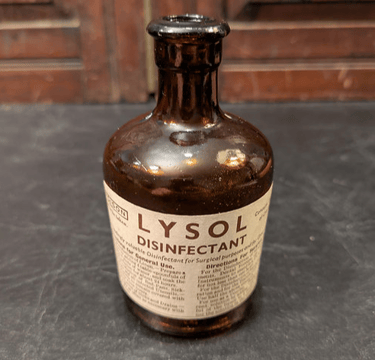
Lysol is an iconic global brand of household cleaning and disinfecting products. While marketed today as a fresh-scented defense against household germs, Lysol hides one of the darkest, most bizarre marketing trajectories in corporate history—evolving from a brutal 19th-century industrial antiseptic into a highly dangerous, chemically caustic 1920’s feminine hygiene product, before finally finding its home under the kitchen sink.
The Deep Dive
The friendly, reassuring aerosol spray cans found in modern grocery stores stand on top of a century-old foundation of severe chemical marketing shifts.
Lysol was formulated in Germany in 1889 by chemist Gustav Raupenstrauch to combat the devastating cholera epidemic sweeping Europe. The original recipe relied heavily on cresol—a harsh chemical compound derived from coal tar that destroys the cellular walls of bacteria on contact. It was an excellent tool for scrubbing down public hospital floors, disinfecting bloody surgical theaters, and treating contaminated sewage lines.
By the 1920’s, the company wanted to expand its market share beyond industrial hospitals and into the daily budget of the American housewife. The brand launched a massive, multi-decade advertising campaign that completely pivoted the product's purpose. Lysol was re-introduced as an intimate, everyday vaginal douching agent.
To sell a highly acidic, coal-tar derivative to women for personal hygiene, the brand utilized intense psychological manipulation. Print advertisements targeted married women, playing aggressively on their fears of losing their husbands' affection. The ads relied on veiled code words, warning women against "intimate neglect," which supposedly caused a loss of "marital bliss" and led to hushed domestic estrangement.
Beneath the high-minded rhetoric of cleanliness and romance lay an open, unvarnished secret: Lysol was being actively used as a cheap, underground method of contraception. In an era where distributing actual birth control information or devices was strictly illegal under federal Comstock laws, women quietly traded the knowledge that douching with Lysol after intimacy would kill sperm cells.
The corporate strategy was a public health disaster. The formulation of Lysol used during the 1920’s and 30’s was incredibly caustic. Spraying a concentrated coal-tar disinfectant into sensitive internal human tissue caused severe chemical burns, intense inflammation, scarring, and systemic poisoning. A comprehensive medical study conducted in 1933 revealed that Lysol douching was responsible for at least 193 recorded acute poisonings and 5 fatalities in a single tracking period, making it one of the most hazardous consumer trends of the interwar era. Furthermore, as a contraceptive, it was functionally useless, failing to prevent pregnancy while causing permanent internal damage.
The dangerous era of personal care came to an abrupt end in the early 1950’s. Facing a mounting wave of medical lawsuits, sharp pushback from the medical community, and the introduction of safer, specialized personal hygiene products, the makers of Lysol executed an absolute corporate retreat. They completely stripped the hazardous cresol and coal-tar compounds out of the formula, replaced them with safer surfactants like benzalkonium chloride, and scrubbed "feminine hygiene" from their vocabulary to lean entirely into the household surface sanitizer identity we recognize today.
Fast Facts
The Poison Control Anchor: Because of its historic toxicity, early 20th-century bottles of Lysol were legally required to carry a prominent skull-and-crossbones icon on the paper label alongside an explicit antidote warning.
The Influenza Surge: During the devastating 1918 Spanish Flu pandemic, Lysol was aggressively pushed by public health departments across the United States as a premier frontline defense, causing millions of households to buy their very first bottle to wash down doorknobs and sickrooms.
References
Tone, A. (2001). Devices and Desires: A History of Anticonception in America. Hill and Wang.
Oxford English Dictionary. (2026). The Lexical Evolution of Proprietary Disinfectant Trademarks and Interwar Household Marketing Alterations.