No Spring Chicken
The Definition
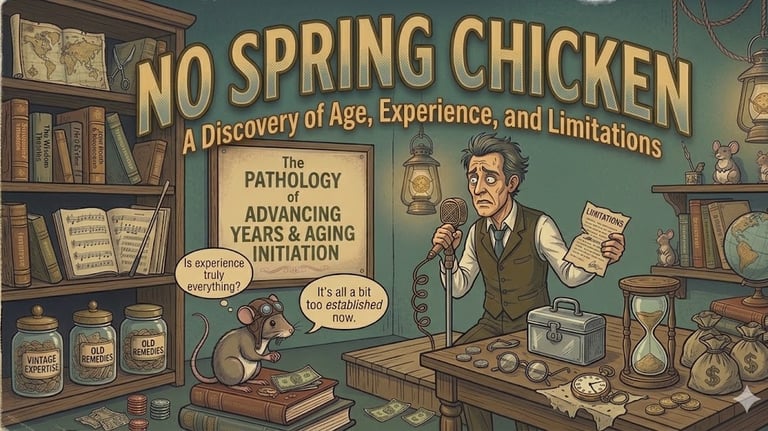
To be "no spring chicken" is to no longer be young. It is a colloquial, slightly humorous way of acknowledging that a person has reached an age where they have more experience—and perhaps more wear and tear—than a newcomer.
The Deep Dive
The phrase originated in the agricultural world of the 1700's, where the age of a bird was a direct marker of its market value and culinary use.
Seasonal Value: Farmers found that chickens hatched in the spring were the most tender and flavorful. These young birds were the best choice for quick roasting. As the year progressed and the chickens aged, their meat became tougher and more fibrous. By the time the following spring arrived, an old bird was definitely "no spring chicken."
Market Deception: Unscrupulous poultry dealers would sometimes try to sell older, tougher birds as premium spring chickens. Savvy buyers would inspect the birds, and if they spotted an older hen, they would dismiss it with the phrase that eventually became our modern idiom. It was a way of saying, "You can't fool me; this one has been around the block."
Social Transition: In the early 20th century, the term shifted from the barnyard to the ballroom. It began to be used specifically to describe women who were perceived to be dressing or acting younger than their actual age. Over time, it lost its gendered edge and became a general, if slightly blunt, observation about the passage of time for anyone.
Fast Facts
The "Tough Old Bird" Connection: This related idiom stems from the same culinary reality—that older animals require more effort to prepare and are harder to "swallow."
First Literary Appearance: While the sentiment is older, the specific phrase was popularized in the early 1900's by writers like Edith Wharton, who used it to needle characters clinging to their youth.
References
Ammer, C. (2013). The Dictionary of Clichés. Skyhorse Publishing.
Wharton, E. (1920). The Age of Innocence.
Oxford English Dictionary. (2026). The Agricultural Roots of Age-Related Idioms.