Not for All the Tea in China
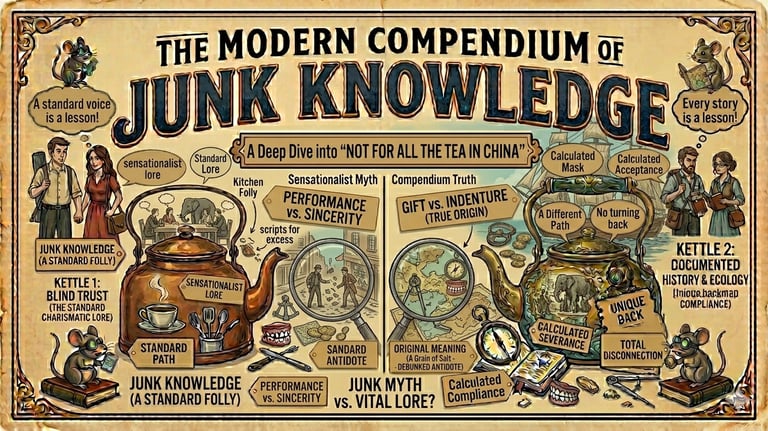
The Definition
A firm, absolute refusal to do something, no matter how great the reward or incentive. It describes a situation where a person’s principles or personal preferences are simply not for sale.
The Deep Dive
This is a literal piece of "junk knowledge" from the height of the British Empire’s obsession with the Camellia sinensis plant. In the 19th century, tea wasn't just a drink; it was the fuel of the industrial world and the primary driver of global trade.
The Monopoly: For centuries, China was the world's sole source of tea. The British East India Company traded massive amounts of silver (and eventually opium) for chest after chest of the "green gold."
The "Incalculable" Sum: To a Victorian, "all the tea in China" represented an amount of wealth so vast it was almost mythological. It was the 19th-century equivalent of saying "not for all the bitcoin in the world" or "not for all the gold in Fort Knox."
The "Australian" Twist: While the tea was Chinese, the phrase itself is likely Australian in origin. The first recorded uses in print appeared in Australian newspapers in the 1890's. At the time, Australia was a major tea-consuming nation, and the hyperbolic "not for all the tea in China" became a favorite way for rugged frontiersmen to express their stubbornness.
The phrase reached peak popularity in the 1920's, fueled by its use in popular songs and plays. It captured the era's romanticized view of "The Orient" while simultaneously asserting a very Western sense of individualistic defiance.
Fast Facts
The "Tea Heist": In 1848, the British sent a botanist named Robert Fortune to China in disguise to steal tea plants and secrets. He successfully smuggled out thousands of seeds, eventually starting the massive tea plantations in India and breaking the Chinese monopoly.
The "Rice" Alternative: In some parts of the world, you might hear "not for all the rice in China," which serves the same purpose but shifts the focus from the luxury trade of the gentry to the staple crop of the masses.
The "Book" Connection: The phrase was the title of a popular 1984 book by Irene Handl, which helped keep the idiom alive in the late 20th century.
References
Fortune, R. (1852). A Journey to the Tea Countries of China. John Murray.
Ammer, C. (2013). The Dictionary of Clichés. Skyhorse Publishing.
The Sydney Morning Herald. (1896, February). Local Idioms and Sayings.
The Oxford English Dictionary. (2026). Tea (n.1). Oxford University Press.