On the Cutting Edge
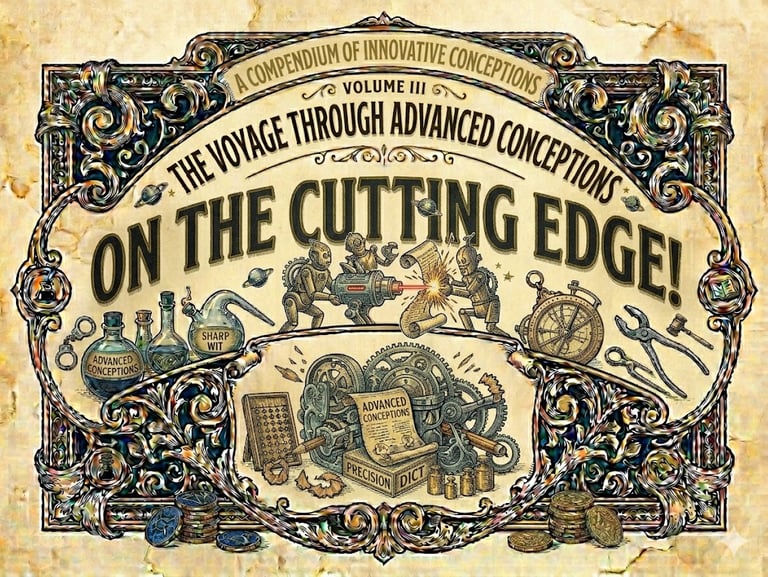
The Definition
To be "on the cutting edge" means to operate at the absolute forefront of a field, industry, or discipline. It describes the most advanced, pioneering position in technological innovation, scientific research, or creative development, where new ground is actively broken before it becomes mainstream or standard practice.
The Deep Dive
The phrase is a masterclass in industrial and mechanical evolution, tracking how the literal sharpness of a physical tool transformed into a universal metaphor for intellectual and technological superiority.
The Machining Roots: Long before it became a favorite buzzword in Silicon Valley boardrooms, "cutting edge" was a purely technical engineering term. In the machine shops and tool-and-die factories of the early Industrial Revolution, the efficiency of an entire production line depended on the literal cutting edge of a machine tool—such as a lathe bit, a milling cutter, or a high-speed drill.
The Physics of the Boundary: In metallurgy and mechanical engineering, the cutting edge is the microscopic boundary where the tool meets raw material (like steel or iron) to shear it away. If that edge is precisely machined and harder than the material it encounters, the tool slices through friction with absolute efficiency. A factory operating with the latest, highest-grade tool steel was quite literally working "on the cutting edge" of manufacturing capability, allowing them to out-produce and out-engineer competitors using older, duller iron tools.
The Evolution of "The Edge": The idiom underwent a series of chronological updates as human technology advanced, creating a family of related terms:
The Cutting Edge (Mid-1900’s): Focused heavily on mechanical precision, advanced manufacturing, and early automation.
The Bleeding Edge (Late 1900's): A darker, cynical tech variant. It implies a position so far ahead of the curve that the technology is unproven, highly unstable, and likely to cause financial or operational "bleeding" to the early adopters who try to implement it before the bugs are worked out.
The Leading Edge (21st Century): A smoother aerodynamic and corporate term, borrowed from the front edge of an airplane wing that first meets the airflow, signifying strategic direction and market dominance.
Fast Facts
The Razor's Edge Contrast: While being on the cutting edge is a highly positive marker of innovation and progress, walking a "razor's edge" represents an incredibly hazardous, precarious situation where the slightest misstep or balance shift will lead to immediate disaster.
The Paradigm Shift: In modern innovation theory, operating on the cutting edge requires a high tolerance for failure. In fields like artificial intelligence, biotechnology, and quantum computing, the cutting edge is constantly moving; what is considered revolutionary today is often codified into standard "junk knowledge" within 18 months.
References
Rolt, L. T. C. (1965). Tools for the Job: A History of Machine Tools to the 1960s. Batsford Books. (Detailing the metallurgical history of tool edges and industrial manufacturing).
Ammer, C. (2013). The Dictionary of Clichés. Skyhorse Publishing.
Oxford English Dictionary. (2026). The Mechanical Nomenclature of Gilded Age Metallurgy and the Proliferation of Innovation Metaphors.