On the Wrong Track
The Definition
This phrase describes a person who is following a line of reasoning, a course of action, or a method that will not lead to the desired result. It implies that while the effort is being made, the direction is fundamentally flawed and will eventually lead to failure or a dead end.
The Deep Dive
The idiom draws its power from the rigid, directional nature of transportation systems, specifically railroads and animal tracking.
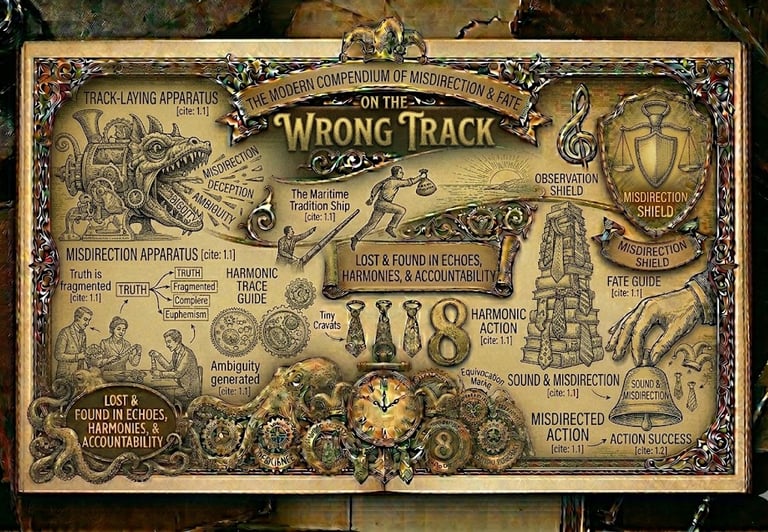
The Railway Reality: In the mid-19th century, the expansion of the railroad changed how people thought about progress. A train is a "straight arrow" of momentum, but it is entirely dependent on the rails beneath it. If a train was switched onto the "wrong track," it didn't just go to the wrong destination—it risked a head-on collision with another locomotive. Being on the wrong track meant you were moving quickly, but toward a disaster.
Hunting and Pathfinding: Before the steam engine, the phrase referred to literal tracking in the wilderness. A hunter following the "wrong track" was pursuing the wrong animal or moving away from their prey entirely. It represented a waste of vital energy and time, often discovered only when the trail went cold or led to impassable terrain.
The Cognitive Shift: Today, we use it most often for intellectual pursuits. If a scientist’s data doesn't support their hypothesis, they are on the wrong track. It suggests that the person needs to stop, re-evaluate their "junk" assumptions, and find the correct path before they go too far to turn back.
Fast Facts
The "Back on Track" Antonym: This is the resolution to the problem. It describes the moment when the error is corrected and the person returns to the productive, intended path.
The "Switching Tracks" Connection: This refers to the deliberate act of changing one's direction or career path to avoid a looming failure or to pursue a better opportunity.
References
Ammer, C. (2013). The Dictionary of Clichés. Skyhorse Publishing.
Ayto, J. (1990). Dictionary of Word Origins. Arcade Publishing.
Oxford English Dictionary. (2026). The Impact of Rail Infrastructure on 19th-Century Metaphor.