Play-Doh
The Definition
A non-toxic modeling compound used by children for arts and crafts projects. Known for its pliable texture, vibrant colors, and unmistakable salty-sweet scent, it is a staple of early childhood development, used to strengthen fine motor skills and encourage open-ended creative play.
The Deep Dive
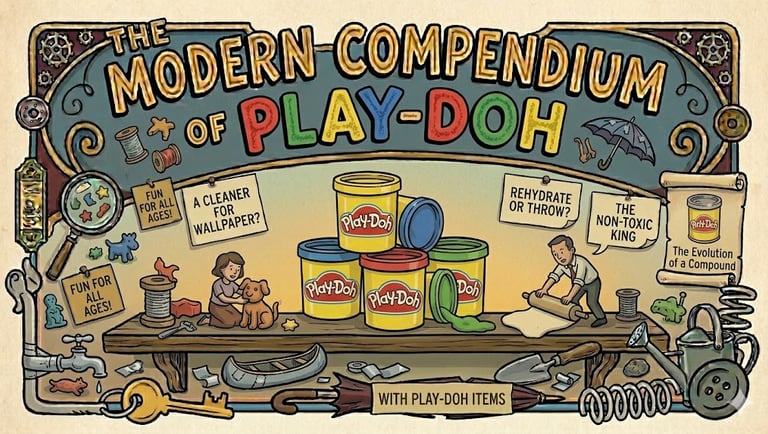
The "junk knowledge" behind Play-Doh is that it was originally an industrial cleaning product designed to solve a very specific 1930's problem: coal soot. Before the widespread use of natural gas, most American homes were heated with coal, which left a thick, black residue on wallpaper that couldn't be cleaned with water without ruining the paper.
The Wallpaper Saver: In the 1930's, Cleo McVicker of Kutol Products in Cincinnati developed a doughy, putty-like substance that could be rolled over wallpaper to lift off the soot. It was a massive success until the post-WWII shift to cleaner heating fuels and the rise of washable vinyl wallpaper made the product obsolete.
The Kindergarten Pivot: By the early 1950's, Kutol was facing bankruptcy. Cleo’s nephew, Joe McVicker, learned from his sister-in-law Kay Zufall—a nursery school teacher—that children found the wallpaper cleaner much easier to mold than traditional stiff modeling clay.
The "Doh" Evolution: Kay Zufall suggested the name "Play-Doh" (rejecting Joe’s original idea of "McVicker’s Edible Modeling Clay"). They removed the detergent from the formula, added almond scent and a bit of color, and began selling it to schools in Cincinnati. In 1956, they demonstrated it at a national education convention, and by 1958, sales topped $3 million.
Play-Doh reached peak "junk" status in 1998 when it was inducted into the National Toy Hall of Fame. It represents the "junk" of chemical engineering: a secret formula (patented in 1965) that is essentially just water, salt, and flour, yet remains one of the most recognizable and nostalgic scents in the world.
Fast Facts
The Trademarked Scent: In 2018, Hasbro officially trademarked the scent of Play-Doh. They described it as a "unique scent formed through the combination of a sweet, slightly musky, vanilla-like fragrance, with slight overtones of cherry, and the natural smell of a salted, wheat-based dough."
The White House Connection: In the early 1960's, the children of President John F. Kennedy were frequently photographed playing with Play-Doh in the Oval Office, providing the brand with priceless, high-profile publicity.
The Salt Factor: The high salt content isn't just for texture; it acts as a preservative to prevent mold and, perhaps more importantly, makes the dough taste terrible to discourage children from eating it (though it remains non-toxic if they do).
References
McVicker, N. W., & McVicker, J. S. (1965). U.S. Patent No. 3,167,440: Plastic Modeling Composition.
Walsh, T. (2005). Timeless Toys: Classic Toys and the Playmakers Who Created Them. Andrews McMeel Publishing.
Hasbro, Inc. (2026). The Official History of the Play-Doh Brand.