Pulling the Wool
The Definition
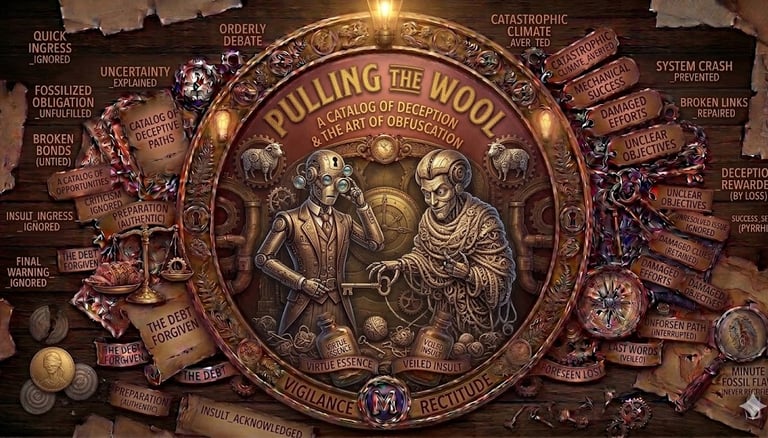
This idiom refers to deceiving someone by concealing the truth or presenting a false reality. It implies a deliberate attempt to hoodwink or trick another person, often by being so clever or distracting that the victim doesn't realize they are being misled until it is too late.
The Deep Dive
The phrase dates back to the 18th and 19th centuries, a period when wearing elaborate wigs made of wool or horsehair was the standard of high fashion and professional status.
The Wig Factor: In the 1700's, men of status—judges, lawyers, and aristocrats—wore large, powdered wigs often referred to as "wools." These wigs were bulky and could easily be tilted. A common bit of physical comedy or a literal act of assault involved jerking a man’s wig down over his face. When this happened, the victim was momentarily blinded by the "wool," allowing a thief or an opponent to escape or commit a crime right in front of them.
Legal Deception: Because of the strong connection between wigs and the judiciary (judges in Britain still wear them today), the phrase took on a specific legal flavor. To "pull the wool" over a judge’s eyes suggested that a clever lawyer or witness was using confusing language or false evidence to blind the court to the actual facts of the case. It was a way of saying justice was being intentionally diverted.
Modern Evolution: As wigs fell out of fashion, the literal act of pulling a hairpiece down was forgotten, but the metaphor for blinding someone to the truth remained. Today, it describes any sophisticated deception, from a complex financial scam to a simple white lie meant to keep a surprise party a secret.
Fast Facts
The "Hoodwinked" Rival: This is a much older cousin to "pulling the wool." It dates back to the 1500's and refers to a "wink" (a hood or blindfold) placed over a person's head to prevent them from seeing.
American Adoption: While the origins are British, the phrase exploded in popularity in the United States during the mid-1800's, appearing frequently in newspapers to describe political maneuvering.
References
Ammer, C. (2013). The Dictionary of Clichés. Skyhorse Publishing.
Ayto, J. (1990). Dictionary of Word Origins. Arcade Publishing.
Oxford English Dictionary. (2026). The Peruke in 18th-Century Colloquial English.