Scuttlebutt
The Definition
Scuttlebutt is a slang term for rumors, gossip, or inside information. In modern professional settings, it refers to the informal watercooler talk or grapevine chatter within an organization—the unverified news that circulates behind the scenes before any official announcement is made.
The Deep Dive
Like many of the colorful idioms in the English language, the term traveled from the wet, disciplined decks of 19th-century sailing ships straight into modern office buildings.
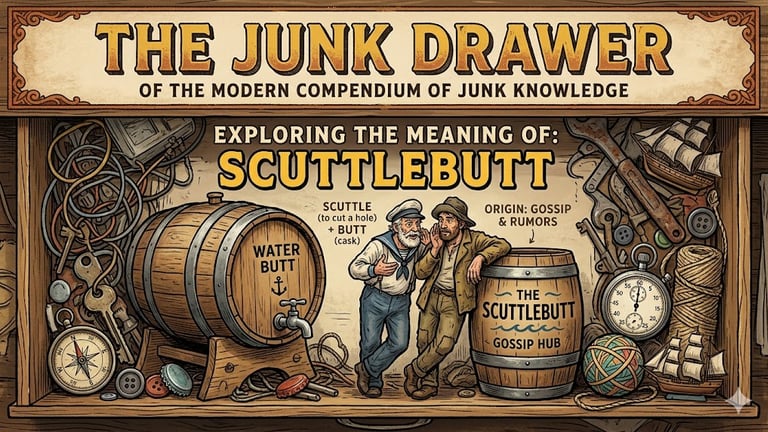
The Anatomy of the Barrel: The word is a literal compound of two historic maritime terms: scuttle (to cut a hole in something, specifically a ship's deck or hull) and butt (a large wooden cask or barrel used to hold liquids). On a wooden sailing vessel, the "scuttlebutt" was a specific barrel of fresh drinking water that had a hole cut into its top so sailors could lower a ladle inside.
The Nautical Watercooler: Because fresh water was strictly rationed and highly prized at sea, the scuttlebutt was a central gathering point. Sailors from different watches and decks would inevitably cross paths while waiting for their turn to drink. While standing by the barrel, they would trade stories, complain about the officers, and speculate about the ship’s next destination.
The Gossip Rebrand: By the early 1800’s, the physical object naturally lent its name to the activity that occurred around it. Sailors began using "scuttlebutt" as a shorthand for the rumors themselves. If someone wanted to know what the crew was whispering about, they would ask, "What's the latest scuttlebutt?"
The Corporate Translation: The phrase survived the transition from wind-powered wooden ships to steel military vessels, heavily cementing itself in Navy and Marine Corps slang. By the mid-20th century, corporate America adopted the term. The wooden water cask was replaced by the electric office watercooler or the breakroom coffee pot, but the fundamental human behavior—gathering around a shared resource to swap unvarnished, unofficial news—remained identical.
Fast Facts
The "Scuttle" Paradox: In general maritime law, to "scuttle" a ship means to deliberately sink it by opening holes in the hull. On deck, however, a "scuttle" was simply a small hatch or opening used for routine access or ventilation.
Investment Slang: The term found a highly sophisticated second life in the financial world through investor Philip Fisher’s 1958 book, Common Stocks and Uncommon Profits. Fisher coined the "Scuttlebutt Method," which instructs investors to research a company not just by reading its balance sheets, but by gossiping with its competitors, suppliers, and former employees to find the unvarnished truth.
References
Rogers, J. (1985). The Dictionary of Clichés. Facts on File Publications.
Fisher, P. A. (1958). Common Stocks and Uncommon Profits. Harper & Brothers.
Oxford English Dictionary. (2026). Nautical Etymology and the Transition of Maritime Jargon to Vernacular English.