Sitting Duck
The Definition
A "sitting duck" is an idiom used to describe an individual, asset, or target that is completely exposed, defenseless, and entirely vulnerable to an oncoming attack, crisis, or catastrophic failure. It signifies a total absence of strategic concealment, mobility, or protective leverage, making the target an incredibly easy mark for any opponent or market correction.
The Deep Dive
The phrase is a direct, literal observation from the traditional world of waterfowl hunting and field sports, dating back centuries before it was codified into modern military and corporate jargon.
To understand the idiom, you have to look at the basic behavioral biology of ducks. When a wild duck is actively flying through the air, it is an incredibly difficult target for a hunter. A duck in flight can accelerate rapidly, change altitude in a heartbeat, and utilize unpredictable wind currents to evade a shotgun blast. Hitting a flying duck requires immense skill, precise timing, and careful calculation of the bird's forward momentum.
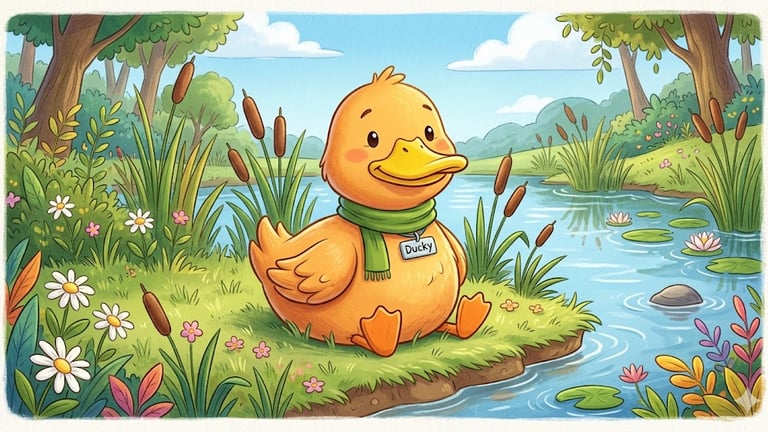
However, when a duck touches down onto a glassy pond or riverbank to rest, feed, or groom its feathers, its entire defensive profile shifts. It becomes stationary or floats with a slow, predictable drift. It loses the immediate benefit of aerodynamic evasion. In the eyes of a marksman or a natural predator, a duck sitting quietly on the water is stripped of its primary defense mechanism: speed. Shooting a sitting duck required zero tactical skill, making the act a universal metaphor for an effortless, unvarnished kill.
By the early 20th century, the phrase migrated off the hunting reserves and marched directly onto the battlefields of World War II. Military strategists and combat pilots hijacked the term to describe exposed infantry divisions, unarmored cargo ships, or heavy bomber formations that were forced to operate without anti-aircraft support or fighter escorts. If a platoon was caught pinned down in an open desert basin with zero physical cover, commanders would frantically radio that they were being left like sitting ducks for enemy artillery.
In modern independent business ventures and high-stakes asset management, the phrase serves as a severe structural warning metric. It describes an operator who leaves their enterprise entirely exposed to risk due to a lack of basic operational safeguards.
For instance, an independent contractor who operates a commercial enterprise without active liability insurance is a sitting duck for a devastating, business-ending lawsuit the moment a jobsite accident occurs. Similarly, an investor who holds a highly volatile cryptocurrency or equity position during a massive market correction without utilizing automated trailing stop-loss orders is a sitting duck—trapped in a stationary posture while the asset's value vaporizes beneath them.
Fast Facts
The "Lame Duck" Cousin: While a sitting duck represents a target that is highly vulnerable to an immediate external attack, a "lame duck" refers to an elected official or leader who is playing out the final days of their term after a successor has already been chosen, rendering them politically weak and structurally ineffective.
The Decoy Integration: To turn wild waterfowl into sitting ducks, early hunters carved wooden decoys shaped like resting birds. They floated these fake sitting ducks on the water to trick flying flocks into believing the landing zone was entirely safe from predators.
References
Ammer, C. (2013). The Dictionary of Clichés. Skyhorse Publishing.
Oxford English Dictionary. (2026). The Proliferation of Field Sport Nomenclature and Ballistic Jargon into Twentieth-Century Organizational Psychology.