Take a Hike
The Definition
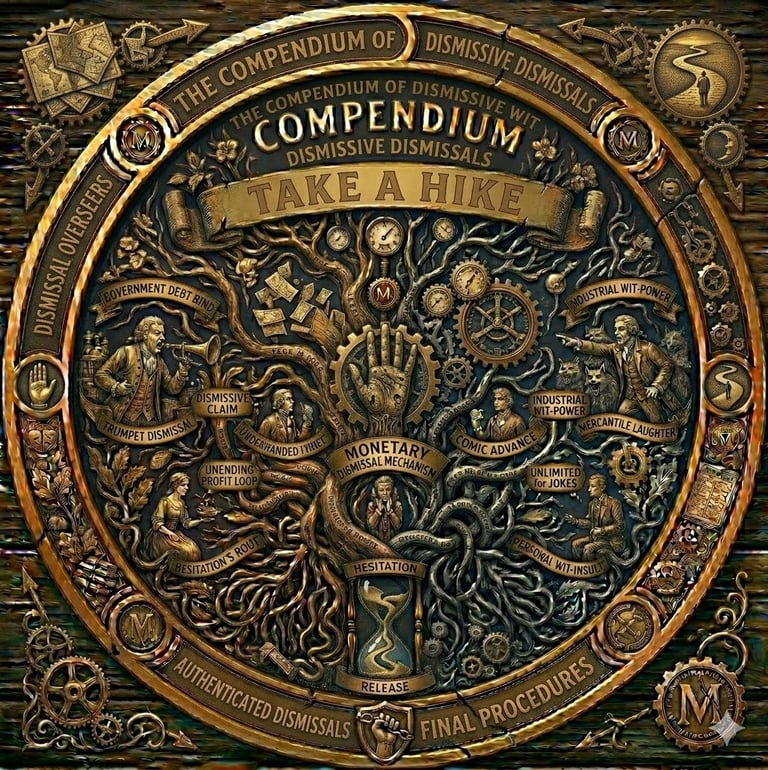
This idiom is a sharp, dismissive command used to tell someone to leave immediately or to mind their own business. It serves as a blunt rejection of a person’s presence, advice, or demands, often delivered when a conversation has reached a point of irreconcilable frustration.
The Deep Dive
While the act of hiking is generally viewed as a wholesome outdoor activity, its idiomatic use is a "brass tacks" verbal expulsion that emerged in the early 20th century.
Physical Distance as Rejection: The phrase relies on the literal meaning of "hiking"—to walk a long distance, typically away from a settled area. By telling someone to "take a hike," the speaker is demanding that the individual put a significant amount of physical distance between themselves and the current situation. It is a more forceful version of telling someone to "go away," implying that they should keep walking until they are no longer a factor.
The "Junk" of Politeness: The phrase is considered a "minced oath" or a sanitized version of more vulgar dismissals. It allowed people in mid-century polite society to express total rejection without resorting to profanity. It represents a tall order of social finality; once someone is told to take a hike, the bridge of negotiation is usually burned.
Urban and Cinematic Influence: The expression became a staple of American film noir and "tough guy" dialogue in the 1930's and 40's. Characters used it to dismiss bothersome subordinates or unwanted suitors, cementing its status in the cultural "flock" as a standard Americanism for "get lost."
Fast Facts
The "Go Fly a Kite" Rival: A common 1950's alternative that carries the same dismissive weight. Both phrases suggest the rejected person engage in a solitary, time-consuming activity far away from the speaker.
The "Hit the Road" Connection: While "hit the road" can sometimes be a neutral statement about starting a journey, when used as a command, it shares the same dismissive "brass tacks" DNA as "take a hike."
References
Ammer, C. (2013). The Dictionary of Clichés. Skyhorse Publishing.
Lighter, J. E. (1994). Historical Dictionary of American Slang.
Oxford English Dictionary. (2026). The Evolution of Dismissive Imperatives in American English.