Tough Old Bird
The Definition
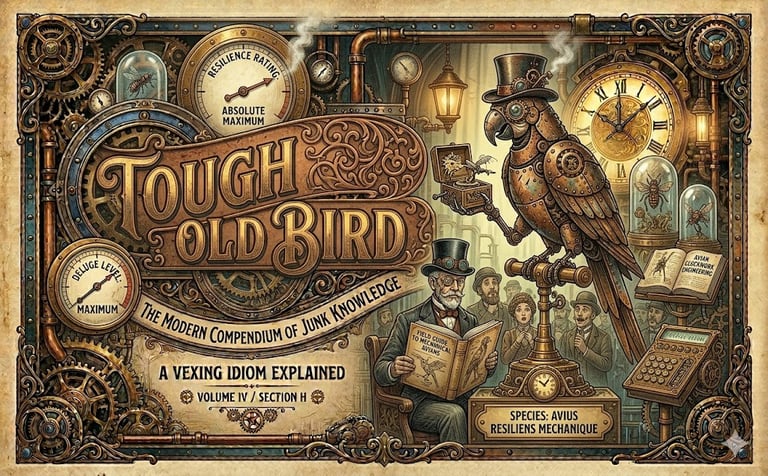
A "tough old bird" is an elderly person who is remarkably resilient, stubborn, or physically hardy. It describes someone who has survived significant hardships and refuses to be intimidated or weakened by age, circumstances, or the opinions of others.
The Deep Dive
This idiom is a literal culinary observation that transitioned into a character study.
Culinary Reality: In the poultry world, age directly correlates to texture. A young chicken is tender and easy to cook. However, an "old bird"—usually a hen that has finished its years of egg-laying—has muscles that have become incredibly tough, stringy, and fibrous. No matter how much you boil or stew it, the meat remains resistant. This "toughness" made such birds difficult to consume but also served as a metaphor for a person who is difficult to "break."
The Survival Instinct: Beyond the kitchen, the phrase honors the survival of the individual. Just as an old bird has managed to avoid predators and disease for years, a person described this way is seen as a seasoned survivor. It implies a durability that younger, "softer" generations might lack.
A Grudging Respect: While the term can be used slightly dismissively to describe someone who is being unyielding or cantankerous, it more often carries a note of high praise. To be a "tough old bird" is to be someone who has weathered the storms of life and come out on the other side with their spirit intact. It suggests that even if they are no longer in their prime, they are far from being a "hot mess."
Fast Facts
The "No Spring Chicken" Connection: This is the chronological opposite. While [No Spring Chicken] simply acknowledges that youth is gone, "tough old bird" focuses on what has been gained in its place: resilience.
The "Rare Bird" Link: In English, calling someone a "bird" has long been a way to describe their character (e.g., "a strange bird"). This specific idiom narrows that characterization to strength and endurance.
References
Ammer, C. (2013). The Dictionary of Clichés. Skyhorse Publishing.
Ayto, J. (1990). Dictionary of Word Origins. Arcade Publishing.
Oxford English Dictionary. (2026). Agricultural Metaphors for Human Resilience.