Way of the Dinosaur
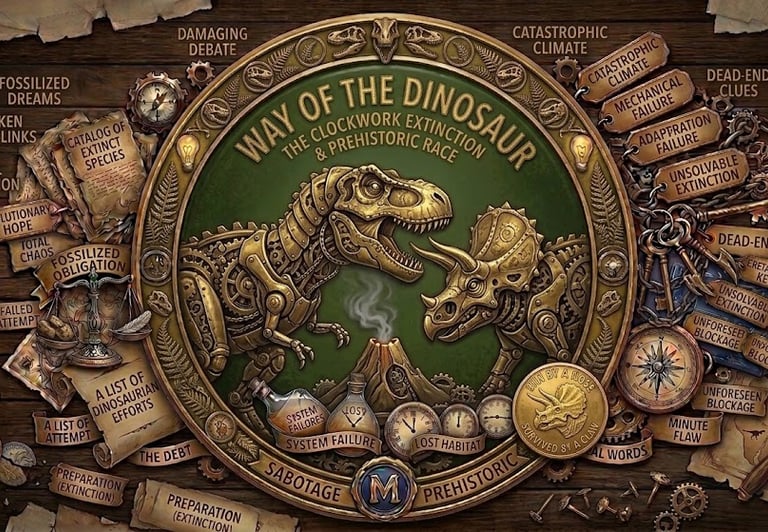
The Definition
This idiom refers to something that has become obsolete, extinct, or has failed to adapt to changing circumstances. It describes the decline and eventual disappearance of a technology, a business model, or a social custom that was once dominant but is now considered a relic of the past.
The Deep Dive
The phrase is a biological metaphor that entered common parlance following the scientific and cultural fascination with paleontology in the late 19th and early 20th centuries.
Adaptation and Extinction: The basis of the idiom lies in the theory of natural selection. For decades, the prevailing "junk knowledge" was that dinosaurs vanished because they were slow, lumbering, and intellectually inferior. While modern science has corrected this view—highlighting a catastrophic asteroid impact—the idiom persists as a warning that a failure to evolve leads to total obsolescence.
Industrial Obsolescence: The phrase gained significant traction during the mid-20th century as rapid technological shifts rendered established industries irrelevant. For example, the horse-drawn carriage went "the way of the dinosaur" with the arrival of the internal combustion engine. It represents a tall order for any established entity to remain relevant when a "wrench in the works" of the global economy changes the rules of survival.
Cultural Shift: By the 1980's and 90's, the phrase was frequently applied to analog technologies. Items like the rotary phone, the typewriter, and the cassette tape are often cited as having gone the way of the dinosaur, replaced by digital alternatives that offer greater efficiency and speed.
Fast Facts
The "Dodo" Rival: "Dead as a dodo" is a similar idiom, though it tends to refer to something that is already completely gone, whereas "going the way of the dinosaur" often describes a process of gradual decline that is currently in progress.
The "Lindy Effect" Contrast: In contrast to this idiom, the Lindy Effect is the idea that the longer something has survived (like a classic book or a basic tool), the longer it is likely to continue surviving, rather than inevitably becoming extinct.
References
Ammer, C. (2013). The Dictionary of Clichés. Skyhorse Publishing.
Gould, S. J. (1989). Wonderful Life: The Burgess Shale and the Nature of History.
Oxford English Dictionary. (2026). Scientific Metaphors in 20th-Century Business Vernacular.